As restaurants sought to enhance their customer experience, they turned to vintage Coca-Cola menu boards to capture the essence of this iconic brand. The 1970s were a golden age for American diners. Stainless steel counters, jukeboxes humming Fleetwood Mac, and families gathering around orange vinyl booths defined an era. But a quiet revolution was happening on the walls of these establishments, led by Coca-Cola. Enter the Marketeer Menu Boards, Coca-Cola’s mid-1970s innovation that promised versatility, style, and increased sales for restaurants of all sizes and transformed diner menus forever.
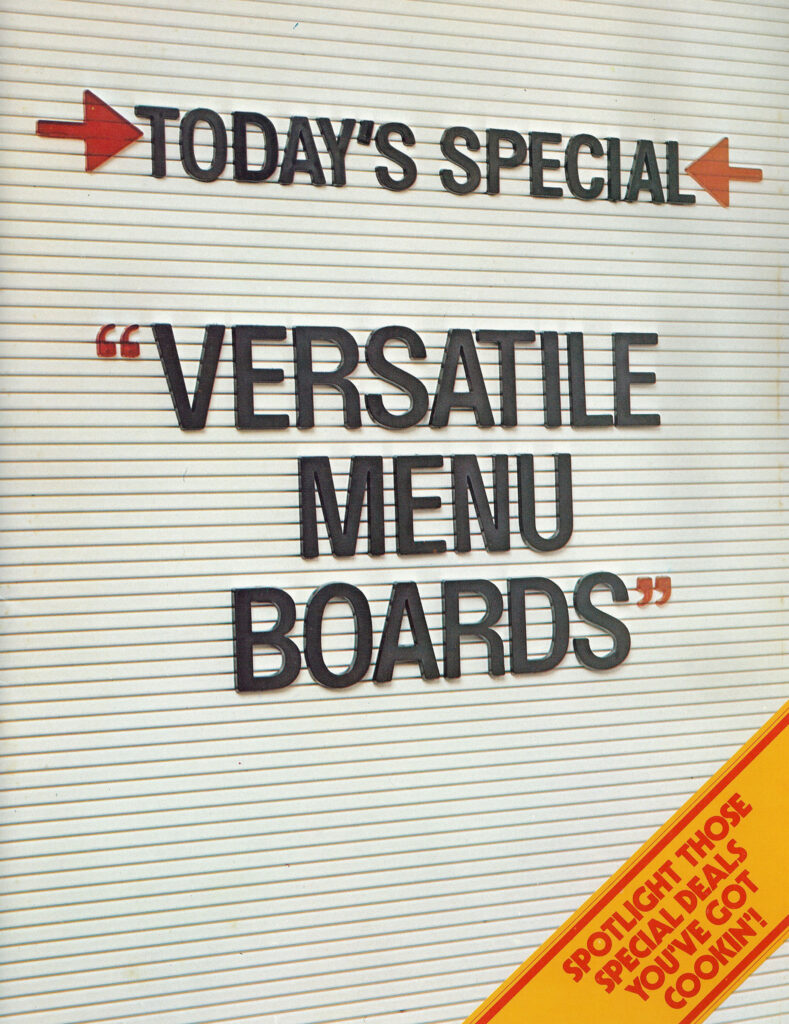
Today’s Special: Versatile Menu Boards
Coca-Cola’s trade catalog from the era proudly declared:
“Today’s Special: Versatile Menu Boards”
These were more than just static signs. Designed with interchangeable panels and crisp typography, they allowed restaurateurs to update menus daily, without needing a new board.
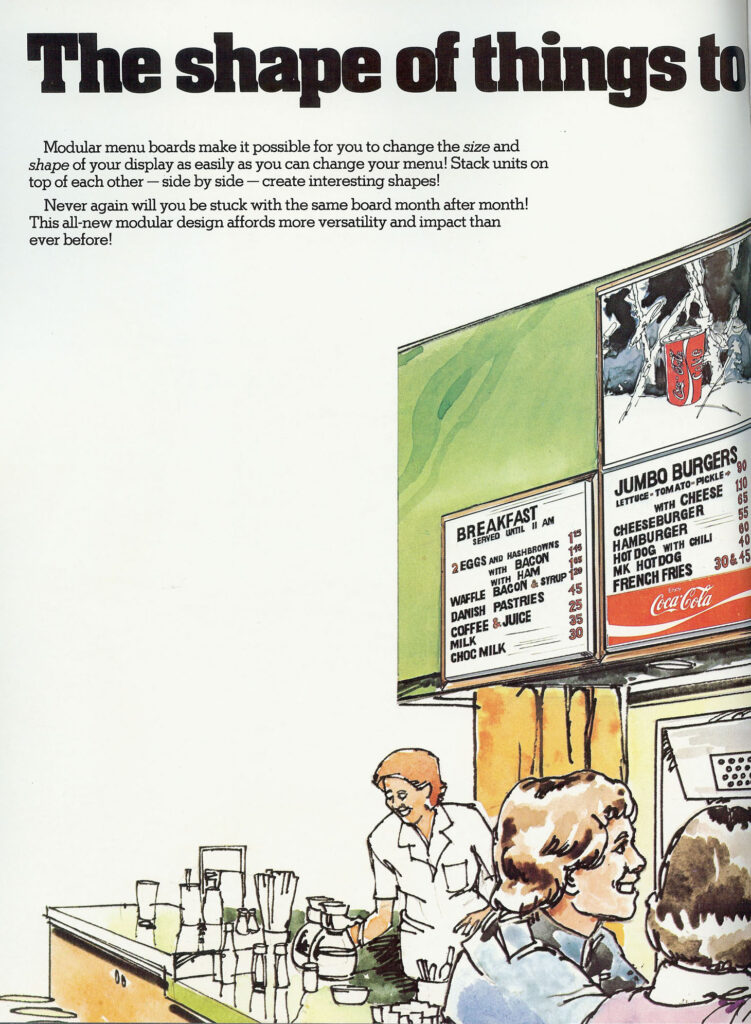
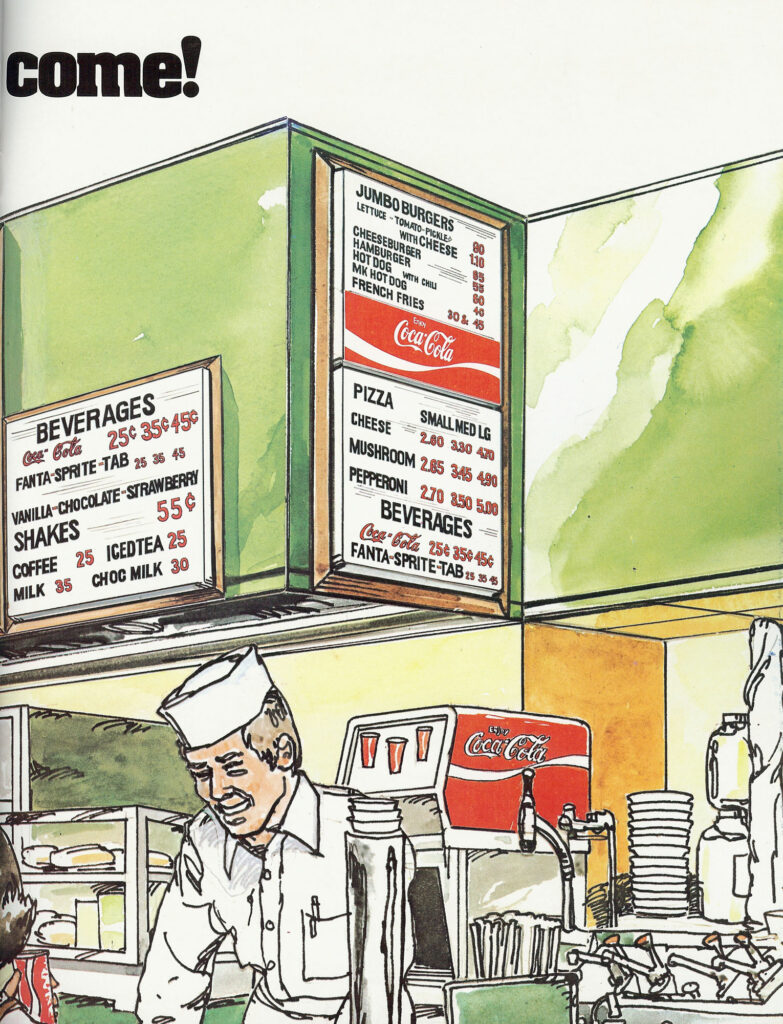
The Shape of Things to Come
Illustrations in the catalog showed families enjoying burgers and fries under gleaming white menu boards with prices like:
- Jumbo Burger – 90¢
- Cheeseburger – $1.10
- French Fries – 30¢
The Coca-Cola logo, in its bold red script, anchored every board, linking quality beverages to hearty meals.
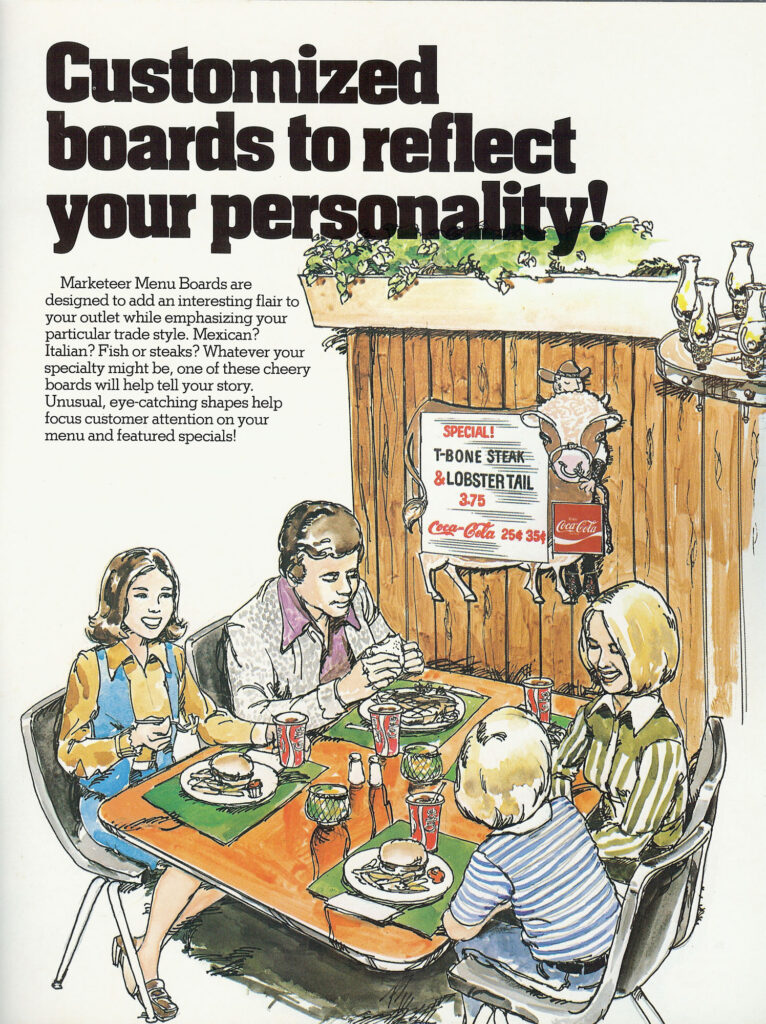
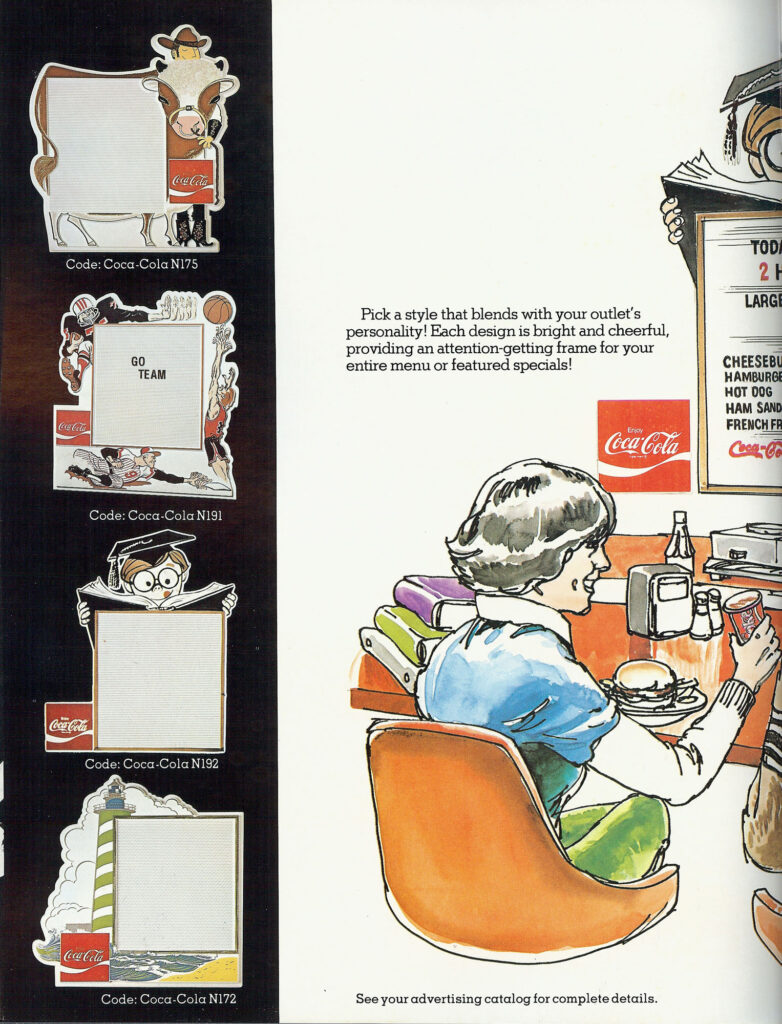
Customized Boards to Reflect Personality
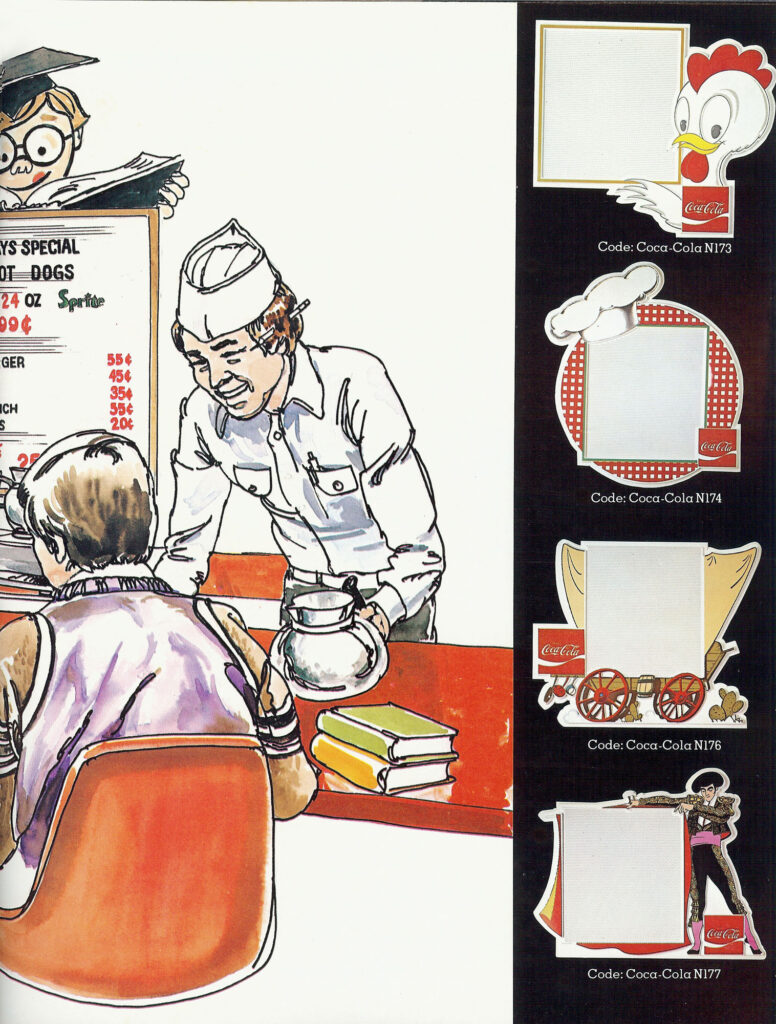
Themed frames gave eateries personality:
- 🐮 Cow-shaped boards for steakhouses
- 🏖️ Lighthouse motifs for coastal diners
- 🎓 Graduation caps for college cafés
- 🤠 Covered wagons for western BBQ joints
These designs weren’t just functional, they were marketing tools.
Quick Promotions, Big Returns
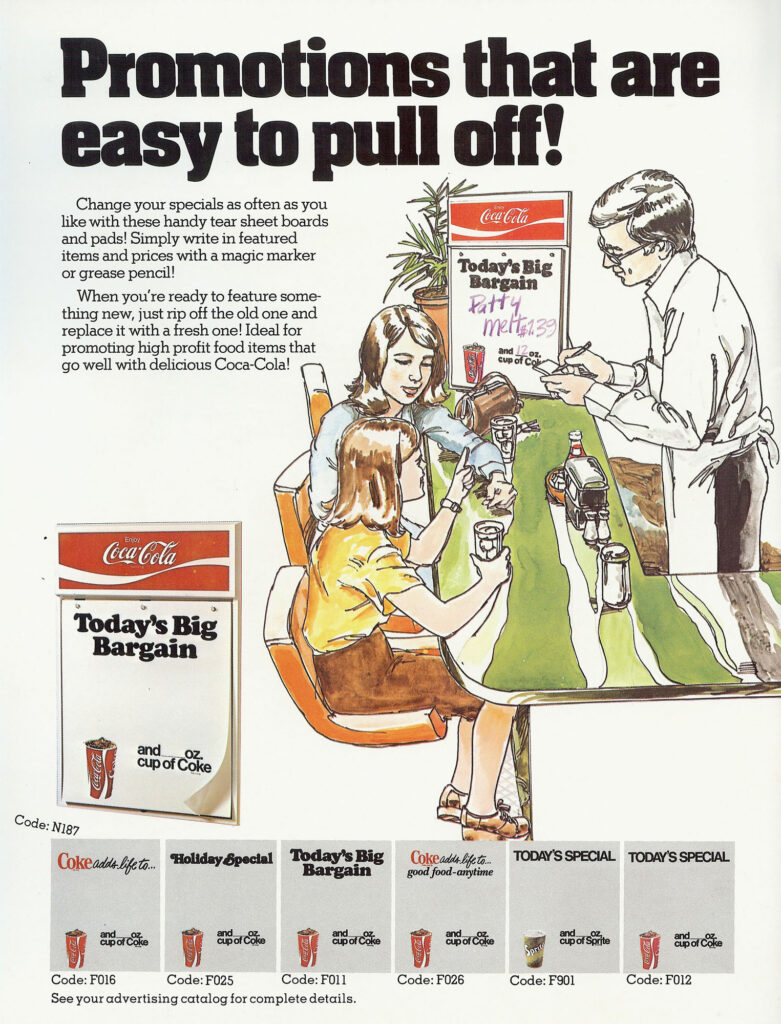
With tear-sheet boards and grease-pencil inserts, specials could be written and erased daily. A few of the combos featured:
- 🍗 Fried Chicken & Coke
- 🌮 Tacos & Coke
- 🍔 Patty Melt & Coke
Coca-Cola wasn’t just selling soda; they were selling higher margins and a branded experience.
Pictorial Inserts: Selling the Meal With the Drink
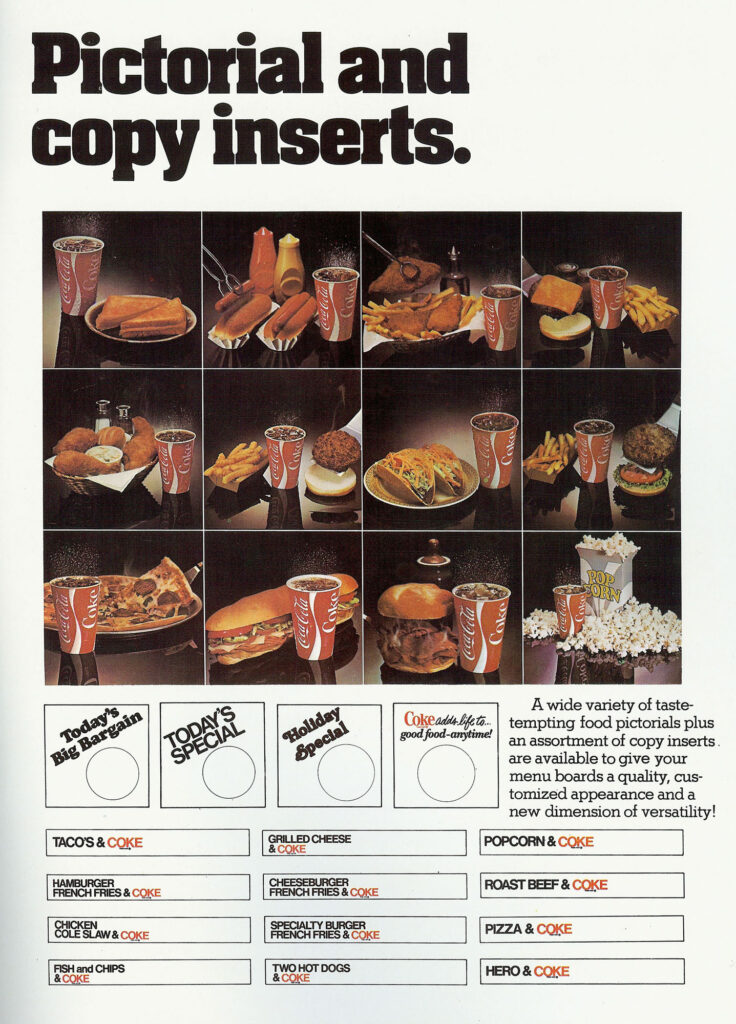
High-quality photo inserts showed:
- Golden fried chicken next to an ice-cold Coke.
- Pepperoni pizza paired with Coca-Cola.
- Burgers, fries, and paper Coke cups under bright diner lights.
These inserts helped even small diners look as professional as rising fast-food chains.
A Cultural Snapshot: Diners and Drive-Ins in the 1970s
Molded chairs, chrome soda fountains, paper hats, these visuals captured more than menus. They documented an era of community, affordability, and Americana, where a family meal out cost under $5.
Why the Mid-to-Late 1970s?
“Coke adds life” slogan debuted in 1976.
- TAB and Fanta branding mirror Coca-Cola’s 70s product lineup.
- Prices match pre-inflation dining costs.
- Soft watercolor illustrations echo 1970s advertising styles.
By 1982, digital menus and Diet Coke would usher in a new era. But in these pages, Coca-Cola reigned supreme.
Legacy of the Marketeer Menu Boards
Today, surviving examples of these boards are rare collectibles. Yet their influence lives on in digital menu systems and co-branded promotions worldwide.
Final Reflection: Today’s Special Forever
The Marketeer Menu Boards remind us of an age where even the simplest diner could feel modern, professional, and enticing, thanks to Coca-Cola.
“Today’s Special isn’t just on the plate, it’s on the wall, sparking cravings and sealing the deal with a Coca-Cola.”
Learn More About the Company Brand Featured in this Promotion
A vintage vending revolution was happening in mid-20th century America. Vending machines were more than just conveniences, they were cutting-edge tools for boosting sales. Among them, the Salesmaker vending machines, built by Highway Steel Products Company in Chicago Heights, Illinois, stood out for their sleek design and bold promises. As the popularity of Dr Pepper surged, vending machines became essential for reaching a wider audience.
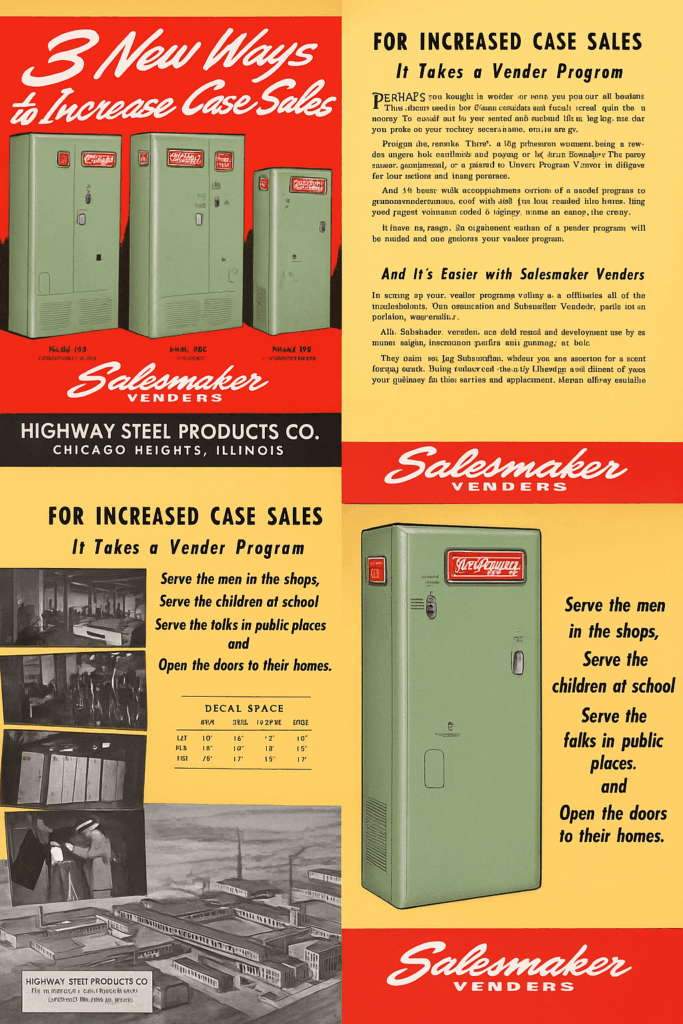
The vibrant Dr Pepper branding on these machines drew attention and increased sales for bottlers.
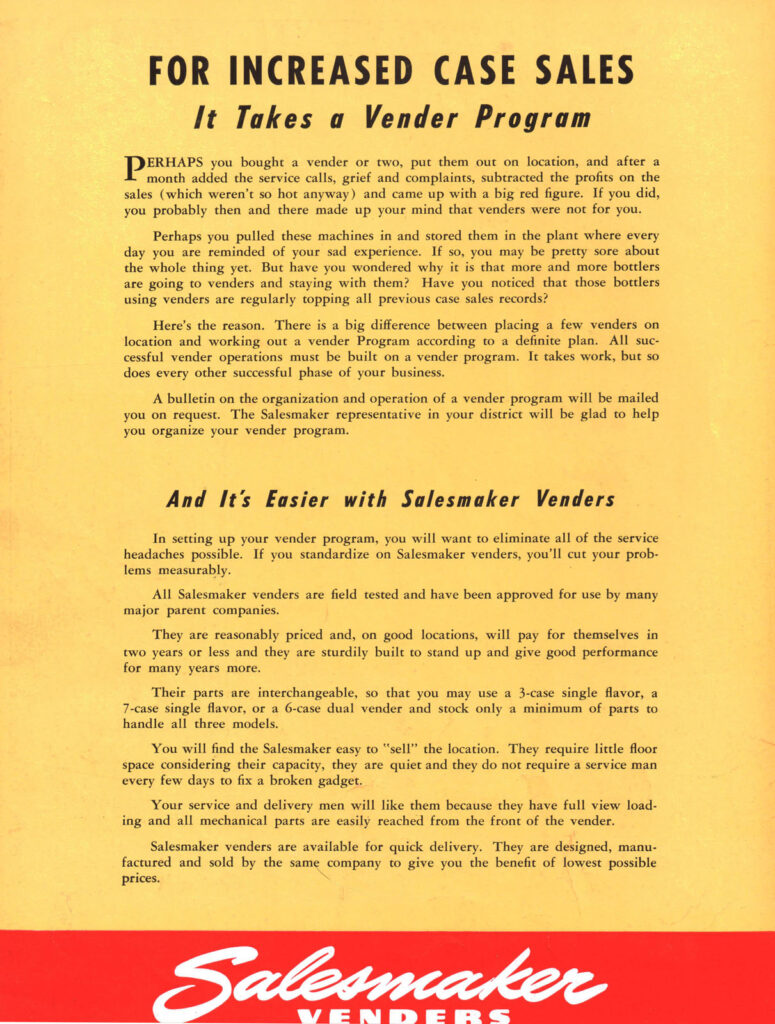
With their pale-green steel frames and the iconic red Dr Pepper logo, these machines became symbols of efficiency and modernity. Promising bottlers “3 New Ways to Increase Case Sales,” they offered a new vision in 1949 for soft drink distribution at factories, schools, and public spaces.
The Chicago Heights Advantage: Highway Steel’s Industrial Hub
Founded in 1924, Highway Steel Products Company grew up alongside Chicago’s rise as a national manufacturing powerhouse. Its factory in Chicago Heights, Illinois, a city 30 miles south of downtown Chicago, was perfectly situated in the dense web of railroads, highways, and industrial supply chains that defined the region.
Chicago Heights was a quintessential Rust Belt city, home to steel mills, foundries, and assembly plants. For Highway Steel, this meant access to skilled labor, raw materials, and shipping routes that could quickly move finished vending machines across the Midwest.
The company specialized in manufacturing durable metal products, and by the 1950s, its Salesmaker line had become a flagship offering. Every Salesmaker vending machine was stamped with this regional heritage: designed, tooled, and assembled under the same roof in Chicago Heights. This vertical integration allowed Highway Steel to control quality, reduce costs, and promise bottlers fast delivery, a critical edge in a competitive vending market.
The Salesmaker Vender Program: A Game-Changer for Soda Bottlers
The 1949 Salesmaker vending program wasn’t just about machines, it was a strategy. Highway Steel’s marketing directly addressed bottlers who had struggled with earlier vending efforts.
“Perhaps you bought a vender or two… and came up with a big red figure,” the copy confessed. Their solution? A full-scale “Vender Program” to deploy vending machines across key locations.
With options like the Model 197 (nine cases, one flavor), Model 297 (eight cases, two flavors), and Model 193 (four cases, one flavor), bottlers could tailor machine placement to different environments.
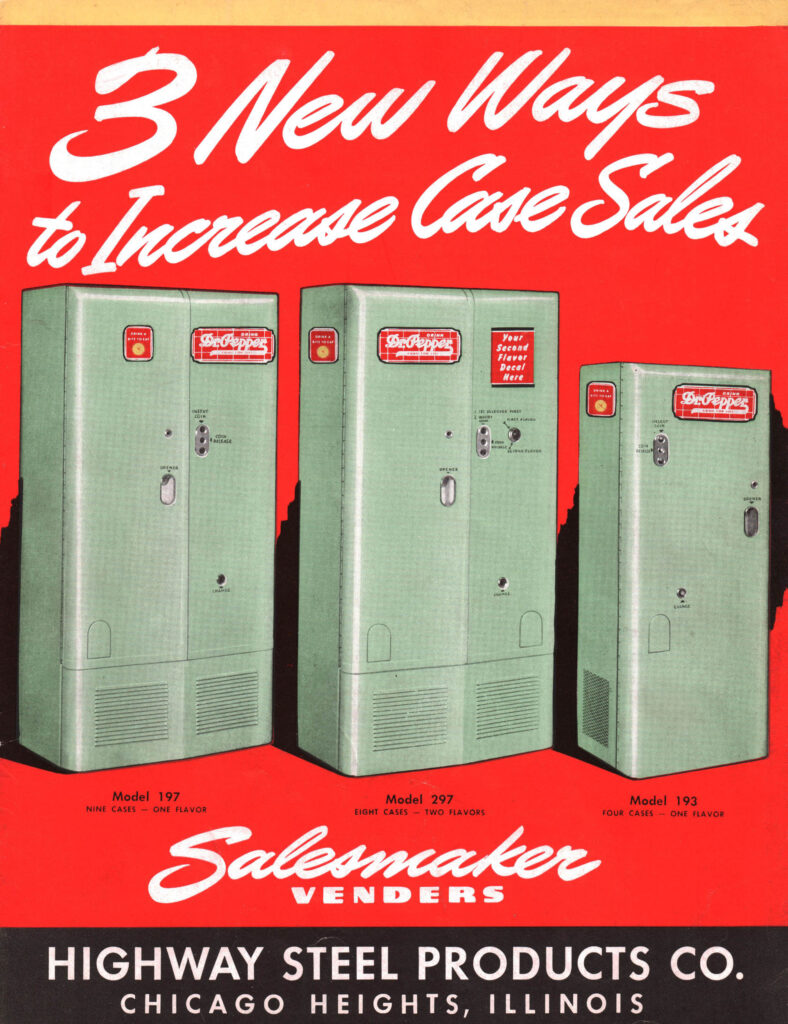
The unique flavors of Dr Pepper paired perfectly with the accessibility of vending machines. Featuring Dr Pepper prominently, these machines captured the interest of potential customers.
Why Dr Pepper Chose Salesmaker Venders
By the late 1940s, Dr Pepper was carving its niche in the competitive soda market. Its unique blend of 23 flavors and quirky marketing, including the famous “10-2-4” slogan, made it a natural fit for vending innovation.
Aligning with Highway Steel Products gave a chance to scale up. The Salesmaker vending machines placed the brand directly in the hands of workers on factory floors, students in school halls, and travelers in public spaces.
This partnership also anchored the expansion in the industrial Midwest. From Chicago Heights, Highway Steel shipped vending machines to bottlers nationwide, helping build a stronger presence in urban markets and small towns alike.
Built in Chicago Heights: Designed for Durability
Highway Steel’s Chicago Heights plant emphasized durability and design. Their machines featured:
✅ Interchangeable parts to simplify repairs
✅ Front-loading service panels for fast maintenance
✅ Heavy-gauge steel construction for years of service
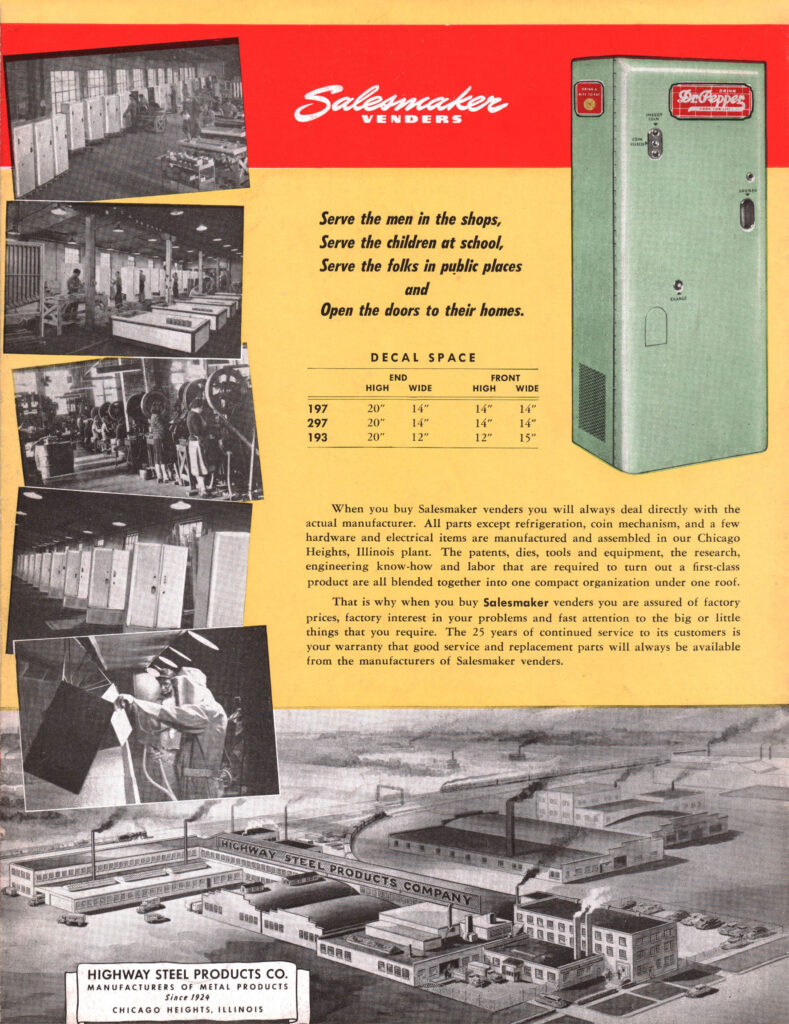
“All parts except refrigeration and coin mechanisms are manufactured in our Chicago Heights plant,” one ad declared. For bottlers, this meant fewer supply chain headaches and faster access to replacement parts.
The company claimed that with good locations, the machines could “pay for themselves in two years or less.” And their compact footprint made them ideal for smaller spaces, an asset in crowded urban environments like Chicago.
Sales of Dr Pepper flourished as machines became fixtures in various locations.
Dr Pepper remains a nostalgic favorite for those who remember using these vending machines.
“Serve the Men in the Shops…”
One memorable tagline summed up the mission:
“Serve the men in the shops, serve the children at school, serve the folks in public places and open the doors to their homes.”
While few machines ever made it into private homes, they became a fixture in workplaces and public venues. The strategy worked, driving Dr Pepper’s visibility in untapped markets and giving Highway Steel Products a firm foothold in the vending industry.
The Legacy of Salesmaker Vending Machines and Highway Steel
Today, surviving Salesmaker vending machines are rare and prized by collectors of vintage vending machines and memorabilia. Their mid-century aesthetic, muted green panels with red accents, evokes nostalgia for a time when steel and soda symbolized modernity.
The Highway Steel Products Company may no longer operate in Chicago Heights, but its impact lingers in these sturdy artifacts of mid-century design. These vending machines tell a larger story about American industry, how small city factories like those in Chicago Heights powered national brands and redefined daily life.
In many ways, Salesmaker venders were predecessors of today’s on-demand culture. They promised a seamless transaction: a nickel in, a cold drink out. That promise, both alluring and fragile, still resonates in our age of apps and instant delivery.
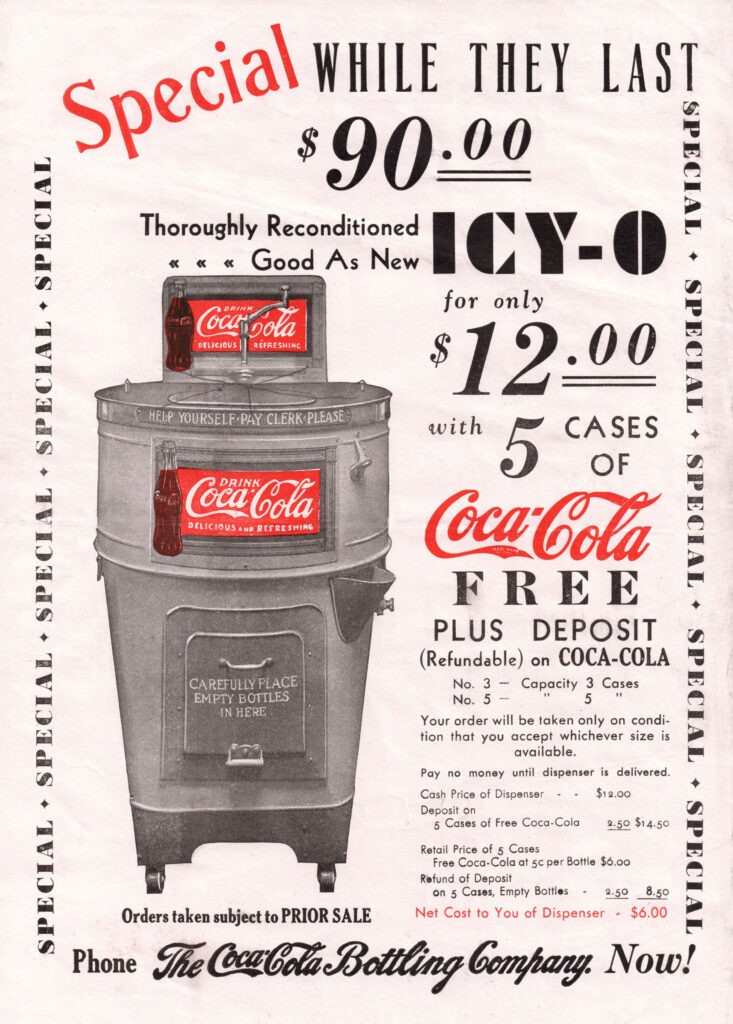
This 1920s Coca-Cola advertisement for the ICY-O dispenser, with its bold promise of a reconditioned unit “Good As New” for $90.00, is more than a simple sales pitch. It is a window into an America on the brink of transformation, a nation defined by Prohibition, technological leaps, and a cultural obsession with speed and convenience. This ad not only marketed a product but also reflected the sweeping societal changes of the Jazz Age.
The eye-catching headline “Special While They Last”, flanked by repeated “SPECIAL” markers, speaks volumes about the urgency Coca-Cola instilled in their marketing. But beyond these bold claims lies a deeper narrative about how Coca-Cola, the bottled drink that began in soda fountains, expanded its empire by making refreshment instantly available, everywhere.
A Barrel of Cool Refreshment
In the early 1920s, the ICY-O dispenser symbolized modernity. Shaped like a metallic barrel and designed to keep bottled Coca-Cola icy cold, it was utilitarian and unpretentious. On the surface, it invited customers to engage with it directly: “Help Yourself – Pay Clerk Please.” For store owners, it meant tapping into a cultural shift toward immediacy and autonomy.
The dispenser’s appeal was clear. With its internal ice compartment and capacity to hold three to five cases of Coca-Cola, it brought the soda fountain experience to any retail setting, from corner groceries to train stations. Its promise of refreshment was simple, efficient, and above all, self-serve.
At $90.00, a substantial sum at the time., the dispenser came with five free cases of Coca-Cola, turning the purchase into a long-term investment for merchants eager to meet growing demand.
The 1920s and Coca-Cola’s Golden Opportunity
The 1920s was an era defined by contradictions: while the U.S. government banned alcohol through Prohibition (1920-1933), Americans developed an insatiable appetite for other forms of refreshment. Soft drinks like Coca-Cola surged in popularity as they filled the void left by shuttered saloons.
The Prohibition Effect
During Prohibition, soda fountains and bottlers seized their chance. Bars converted into “soda shops,” and Coca-Cola’s bottling plants increased exponentially. By 1929, the company boasted more than 1,000 bottling plants, reflecting their aggressive push to make Coke available anywhere.
The ICY-O catered perfectly to this landscape. It offered storekeepers a means to capitalize on the beverage’s popularity without installing a full soda fountain, which required counter space and staff.
Urbanization and Changing Lifestyles
As millions flocked to cities, the demand for convenient, affordable refreshments grew. The rise of the automobile also made roadside commerce viable, and cold bottled Coca-Cola became the drink of choice for travelers needing a quick stop.
A Shift Toward Self-Service
The ICY-O reflects a broader cultural pivot toward self-service retailing. While today it feels second nature to grab a bottle from a cooler, in the 1920s, this was a novel concept. Coca-Cola was teaching America to trust itself in this new consumer landscape.
The ICY-O Company of Charlotte, North Carolina: A Crucial Partner
While Coca-Cola was busy expanding its bottling empire, the dispensers themselves were produced by The ICY-O Company of Charlotte, North Carolina. Founded in the early 20th century, ICY-O specialized in innovative refrigeration solutions designed to hold ice and keep bottled beverages cold for hours.
ICY-O became a natural collaborator for the soft drink giant. Their dispensers were rugged and functional, using insulated metal barrels that merchants could refill with ice daily. These devices became a fixture in general stores, train depots, and filling stations across the South and eventually nationwide.
The partnership illustrates Coca-Cola’s genius for collaboration with local manufacturers. Instead of designing and producing dispensers in-house, Coca-Cola worked with ICY-O to distribute thousands of these machines, effectively embedding Coca-Cola branding into ICY-O’s very product design. The result was a mutually beneficial relationship: ICY-O enjoyed steady business supplying dispensers, while Coca-Cola expanded its reach with minimal overhead.
The ICY-O Company itself contributed to the early refrigeration revolution in America, helping to transition businesses from block ice chests to insulated, self-contained units.
Functional Elegance with Urgent Messaging
The ad’s design is straightforward but effective. Oversized fonts scream “$90.00”, “$12.00”, and “FREE”, while Coca-Cola’s red script logo provides instant brand recognition. The repeated “SPECIAL” down both margins functions almost like a neon sign, an attention-grabbing tactic for busy shopkeepers flipping through trade journals.
Unlike later mid-century Coca-Cola ads that leaned into lifestyle imagery, this ad is strictly business. It’s a utilitarian pitch aimed squarely at merchants, highlighting practical details like the refundable deposit and machine capacity.
Why This Ad? Why This Moment?
Coca-Cola’s approach with the ICY-O demonstrates their keen understanding of the era’s retail challenges. Instead of relying solely on soda fountains, then the primary venue for soft drink sales—they equipped merchants to meet consumers where they were. This strategy expanded their footprint and reduced dependence on counter service.
It also points to Coca-Cola’s early mastery of vertical integration. By controlling the bottling, distribution, and retail equipment (with help from companies like ICY-O), Coca-Cola ensured that a cold Coke was never out of reach.
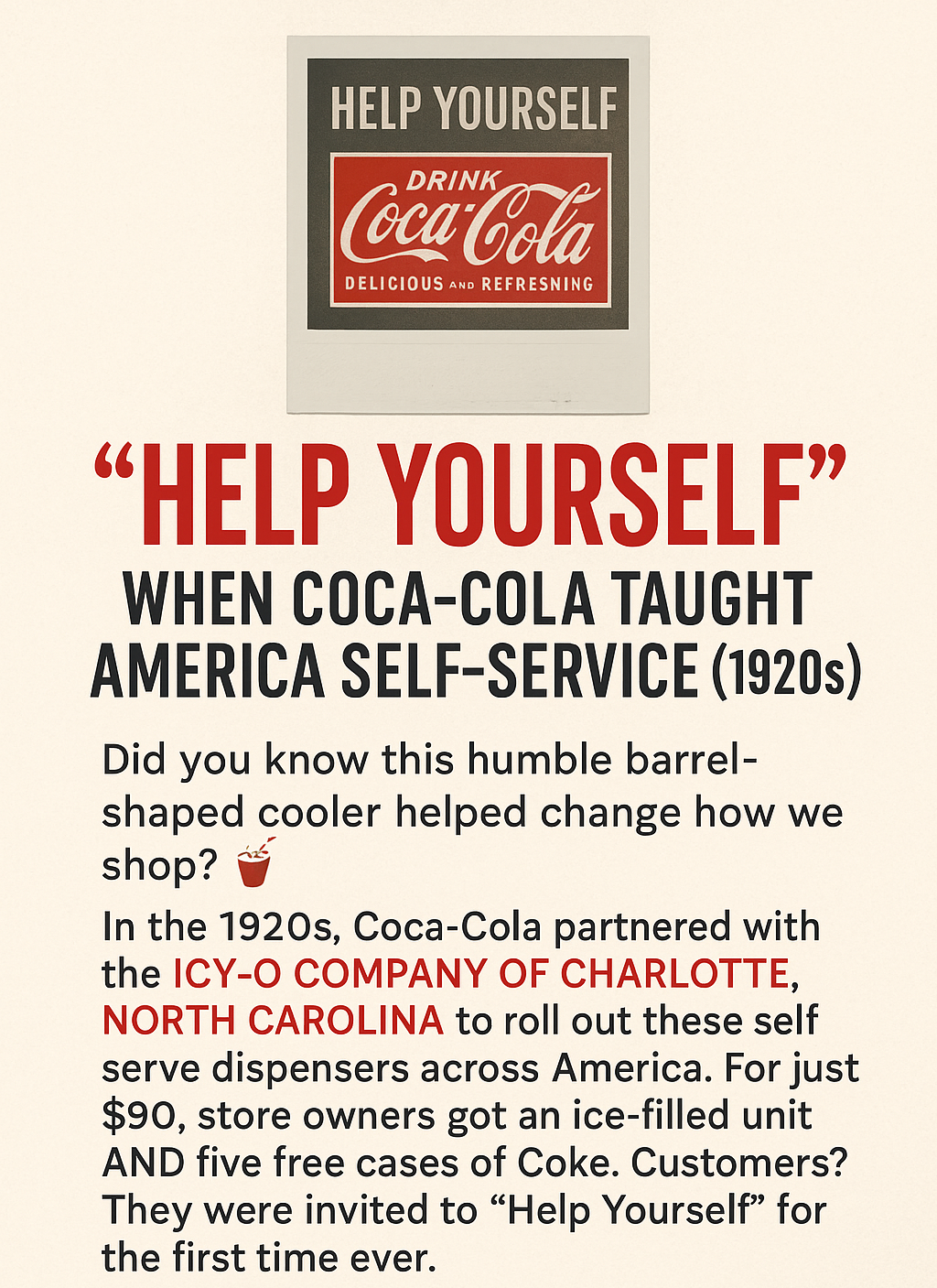
The ICY-O wasn’t just a dispenser; it was part of Coca-Cola’s broader effort to modernize refreshment and drive bottling sales. It combined the allure of chilled soda with the practicality of self-service, offering store owners a chance to engage a customer base that increasingly prized speed and convenience.
This ad reflects a pivotal moment when Coca-Cola transitioned from a pharmacy fountain drink to a bottled icon of mass consumption.
ICY-O’s Legacy
The ICY-O Company faded from prominence as refrigeration technology evolved, but its influence remains. These early dispensers taught Americans the ritual of reaching into a cooler for a cold drink, a behavior that Coca-Cola leveraged into dominance throughout the 20th century. By democratizing access to cold soda, ICY-O dispensers transformed corner stores and roadside stands into vital nodes in Coca-Cola’s distribution web. This collaboration helped solidify Coca-Cola’s reputation as the drink of choice for a nation on the move.

Legacy Takeaway
Nearly a century later, the ICY-O seems quaint, yet it symbolizes Coca-Cola’s foresight and ICY-O’s role in refrigeration history. This ad wasn’t just selling a machine, it was selling a future where refreshment was instant and ubiquitous.
For Coca-Cola, the strategy worked. By 1929, despite the looming Great Depression, the brand’s reach was unrivaled. The ICY-O had done its part, proving that with the right tools and a little ice, even the smallest shop could become a Coca-Cola outlet. The ad’s simple message, “Help Yourself” was prophetic. It anticipated an America that would come to embrace convenience and autonomy as hallmarks of modern consumer culture.
Learn More About the Company Brand Featured in this Promotion
A new line of clocks was rolled out to bottlers in 1970 in the “Bottler Advertising Catalog.” This initiative marked a significant evolution in the way the brand engaged with its bottlers. It aimed not only to enhance the visibility of the brand but also to create a cohesive marketing strategy that encompassed various promotional materials.
Bottlers were offered four new types of clocks, which varied in design and purpose. These ranged from decorative clocks suitable for retail stores to functional clock units that could be displayed in menu boards. Each clock was uniquely designed to draw attention and was adorned with vibrant maroon and blue colors, all featuring the popular slogan, “Enjoy.” This slogan encapsulated the essence of the brand while promoting a sense of enjoyment associated with the beverages.
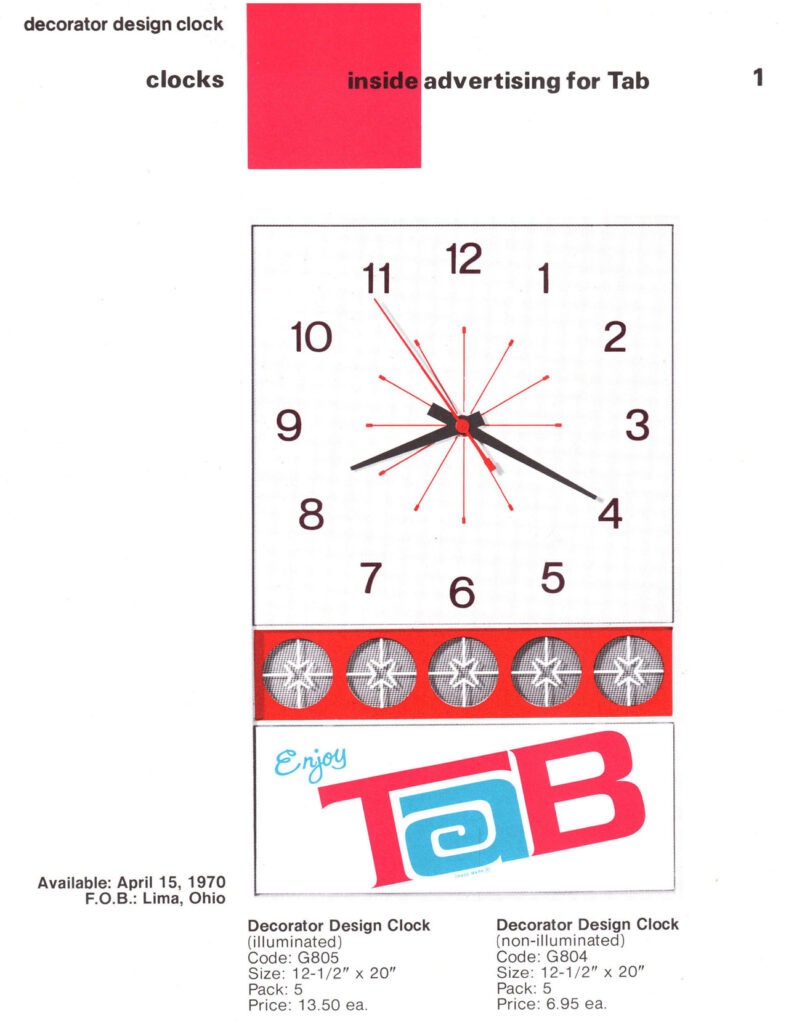
Decorator Design Clocks
The clocks offered under the “Decorator Design” category included two distinct versions: the illuminated model (model number G805) and the non-illuminated version (model number G804). Both clocks showcased a captivating decorator design nestled within circles just below the clock face. They were beautifully complemented by the slogan, “Enjoy.” Manufactured by Neon Products of Lima, Ohio, these clocks were designed to enhance the aesthetic appeal of any venue they adorned.
The illuminated version, with its soft glow, was particularly popular in darkened environments such as bars and restaurants, where it could attractively highlight the branding. Both models were promoted as available for bottlers to use in their outlets starting April 15, 1970, providing an excellent opportunity for increased brand visibility.
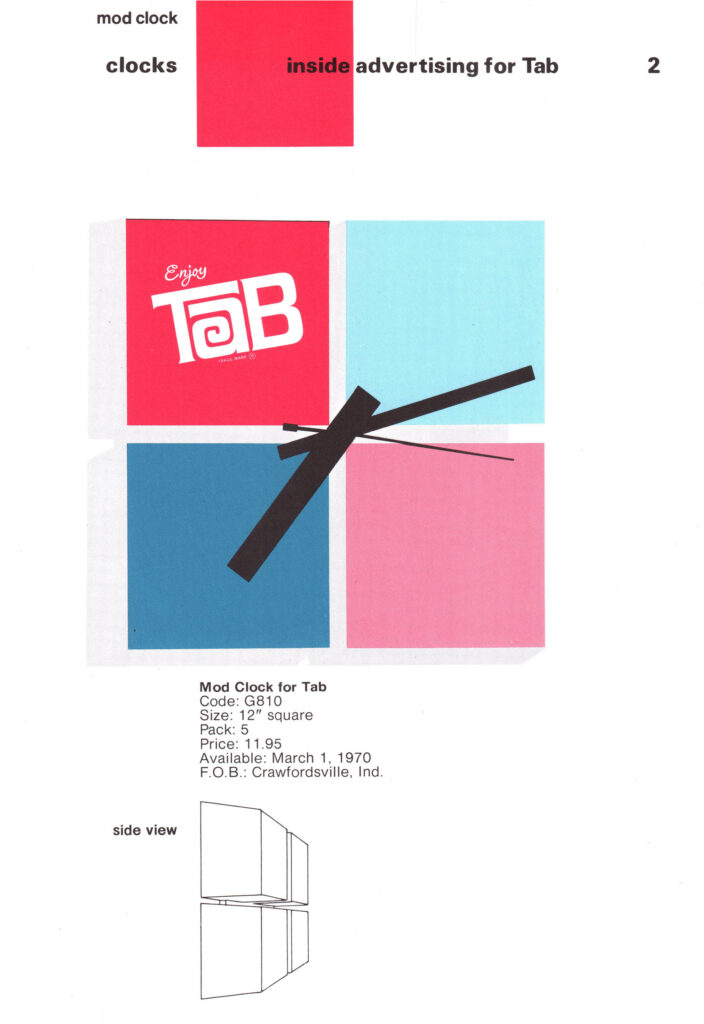
Modular (Mod) Clocks
The next clock offering fell under the modular category, commonly referred to as the “mod” clock. This clock, with its bright and vibrant colors, featured a striking clock face adorned with the slogan “Enjoy” prominently displayed. Model number G810 was manufactured by Ingress-Plastene of Crawfordsville, Indiana, and was designed to appeal to a broad consumer base.
The clock’s unique modular construction allowed bottlers to customize its appearance, making it suitable for various settings, whether in retail environments or dining establishments. This versatility contributed to the clock’s popularity among bottlers, as it enabled them to promote the brand effectively while enhancing their store’s ambiance.
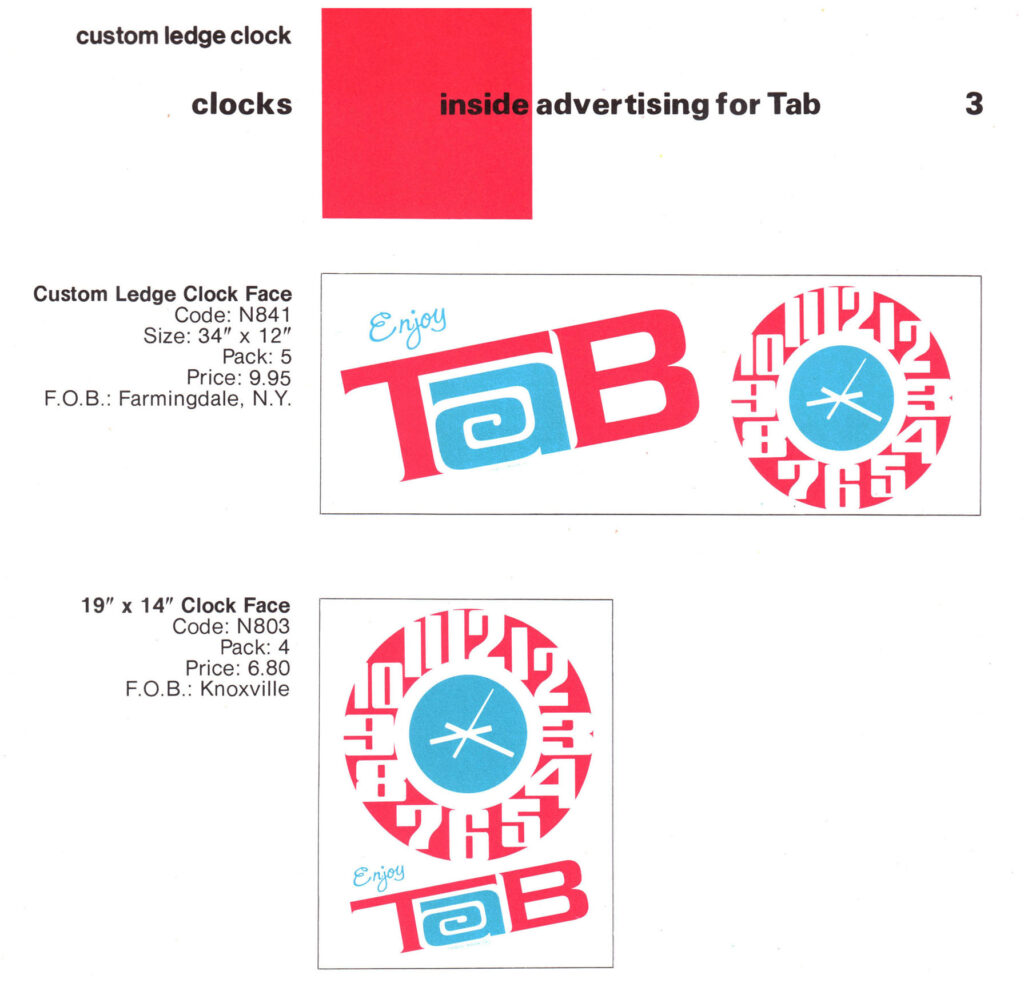
Custom Ledge Clock Faces
The final set of clocks introduced was the “Custom Ledge” clocks, ingeniously designed to fit seamlessly into custom ledge menu boards. These clocks came in two sizes, providing flexibility for various display options. The horizontal model (model number N841) and the upright model (model number N803) were crafted to accommodate promotional advertisements for the brand and others.
This design allowed for easy swapping of advertisements based on seasonal promotions or new product launches. This innovative approach not only supported the marketing efforts of bottlers but also ensured that the promotional displays remained fresh and engaging for customers. Both models emphasized the iconic maroon and blue colors and proudly displayed the slogan “Enjoy,” reinforcing brand identity effectively.
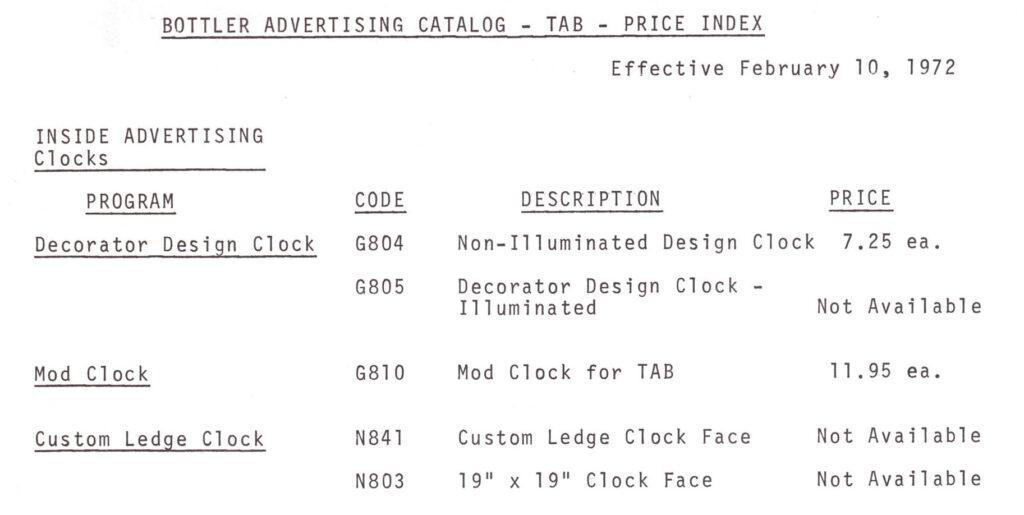
Price Index for the TAB Clocks
The Bottler Advertising Catalog provided bottlers with a detailed price index for the new clocks, effective February 10, 1972. The pricing structure was designed to make the clocks accessible to a broad range of bottlers. The non-illuminated decorator design clock was priced at a modest $7.25, while the illuminated version was not available during this period.
The modular (mod) clock was offered at $11.95 each, reflecting its unique design and manufacturing quality. However, it is important to note that the custom ledge clocks were not included in the offering for 1972, signaling a shift in promotional strategy as the brand adapted to changing market conditions and bottler needs.
Products Featured with the Sales Materials
The five new clocks introduced in 1970 included:
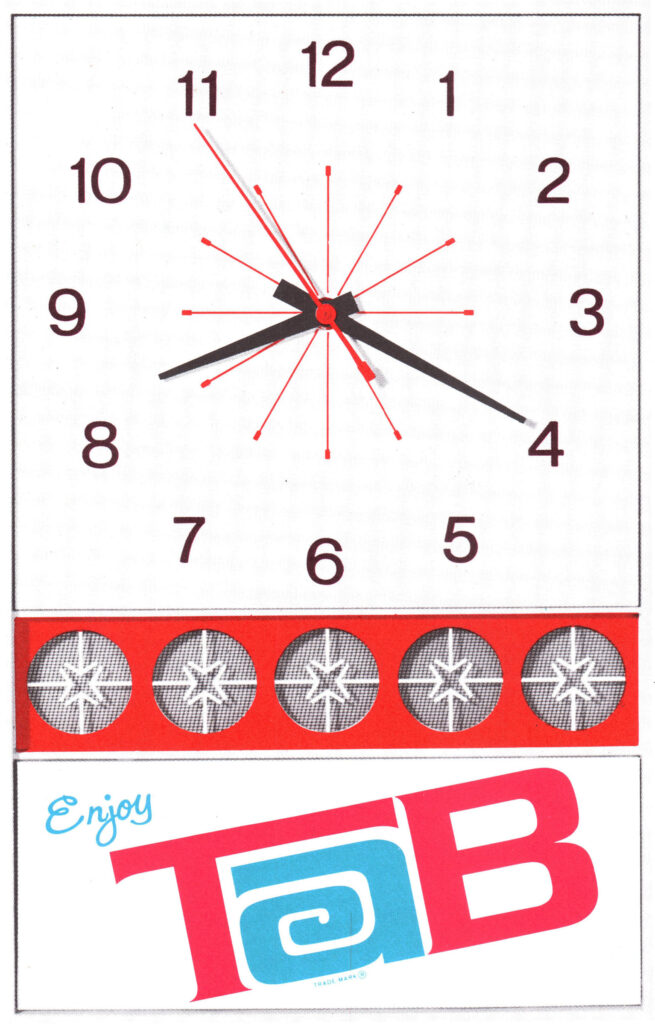
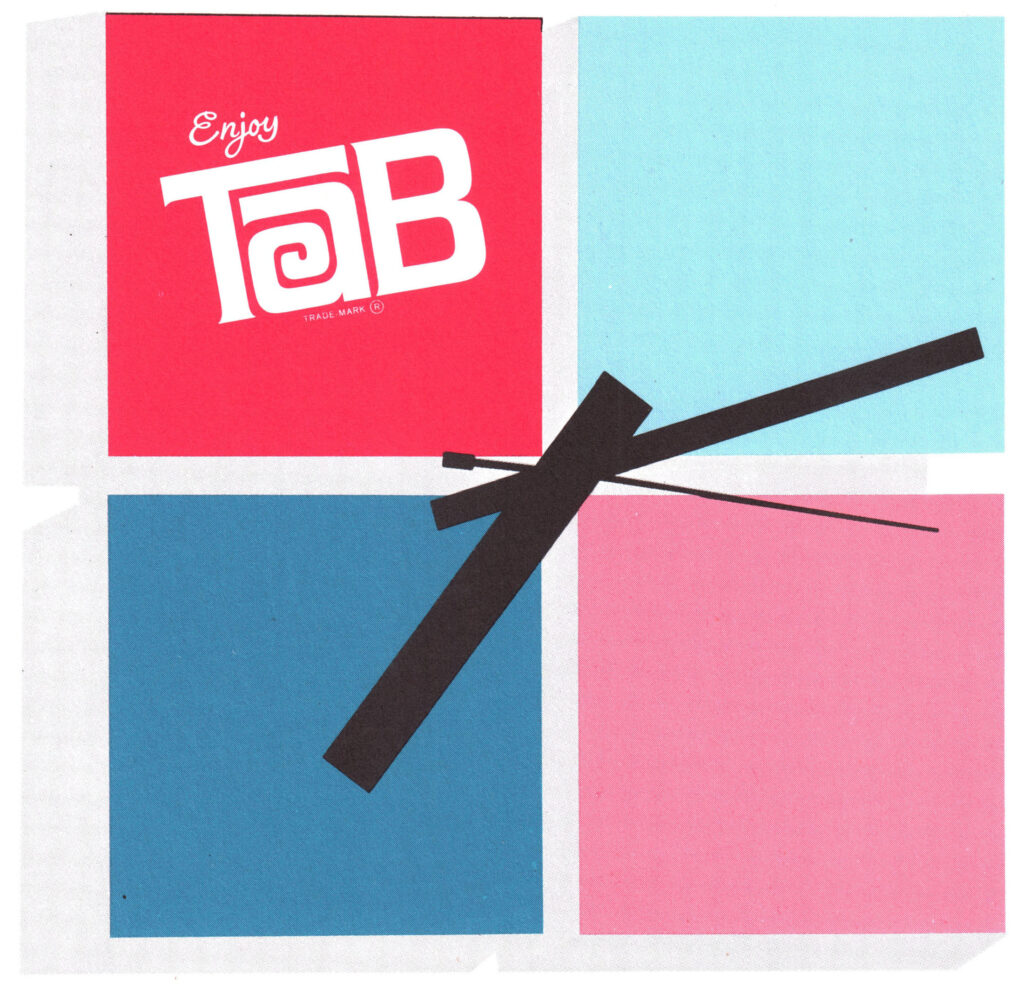
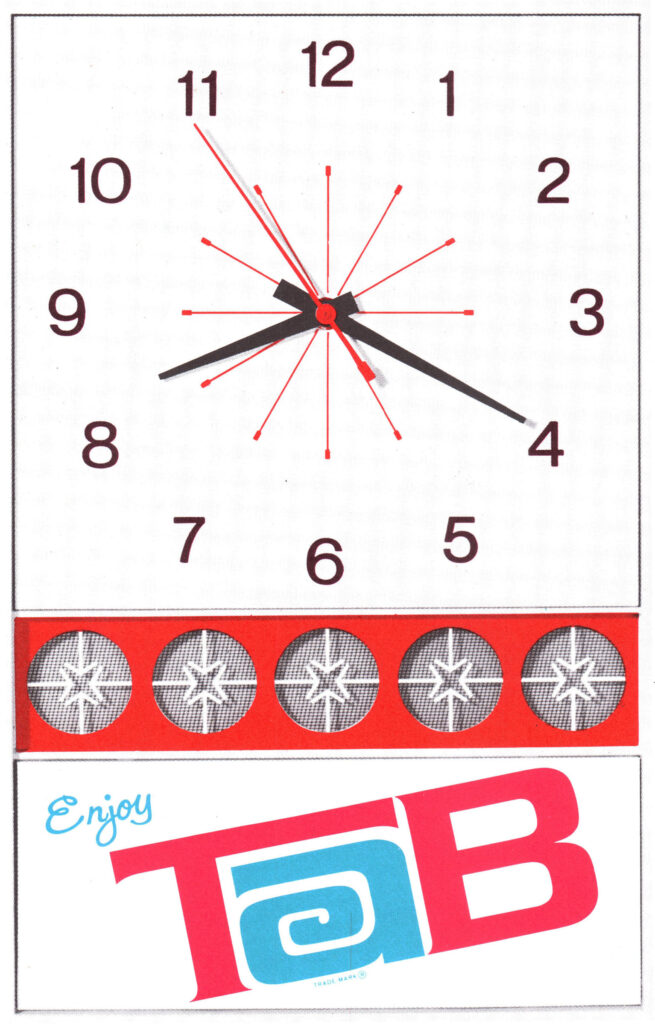
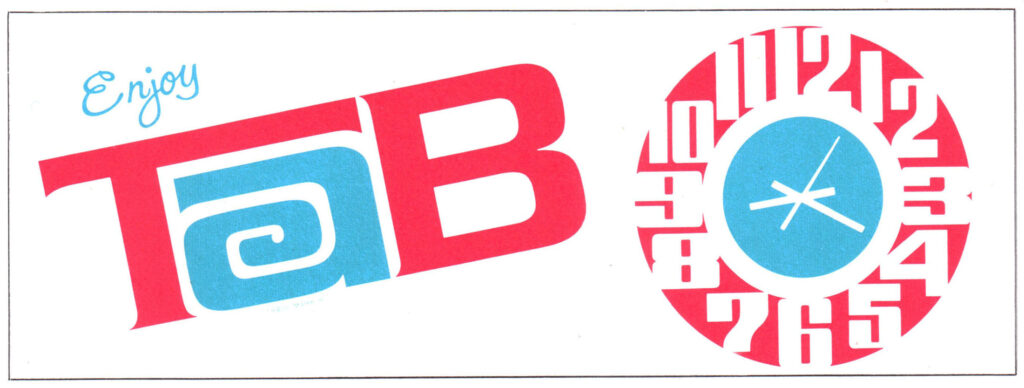
- A Neon Products G805 Decorator Design TAB Illuminated Clock (offered from April 15 of 1970 through at least early 1972)
- A Neon Products G804 Decorator Design TAB Non-Illuminated Clock (offered from April 15 of 1970 through 1972)
- An Ingress-Plastene G810 TAB Modular Illuminated Clock (offered from March 01 of 1970 through 1972)
- A N841 TAB Custom Ledge Clock Face (offered from 1970 through the end of 1971)
- A N803 TAB 19″ x 14″ Clock Face (offered from 1970 through the end of 1971)
Learn More About the Company Brand Featured in this Promotion
As a testament to the quality and design of these clocks, many bottlers reported increased customer interest and engagement in their locations. The clocks not only served a functional purpose but also enhanced the overall ambiance of the establishments where they were displayed.
For instance, restaurants that adopted illuminated clocks found that they became focal points in their décor, often leading to positive conversations among patrons about the brand. This engagement contributed to stronger brand loyalty and customer retention, showcasing the impact of effective advertising tools in the beverage industry.
Moreover, the marketing strategy surrounding these clocks emphasized the importance of brand visibility during a period when competition in the beverage market was intensifying. By providing these promotional tools, the brand not only supported its bottlers but also reinforced its brand message.
This encouraged customers to choose the product over competitors. This strategic alignment between bottlers and the brand exemplified effective collaboration in marketing initiatives.
In conclusion, the introduction of new clocks in 1970 represented a significant marketing effort aimed at enhancing brand visibility and supporting bottlers. The clocks, with their unique designs and effective slogan, played a crucial role in the overall promotional strategy.
As bottlers utilized these promotional clocks, they not only improved their own brand representation but also contributed to the legacy and growth of the brand in the beverage industry.
