As restaurants sought to enhance their customer experience, they turned to vintage Coca-Cola menu boards to capture the essence of this iconic brand. The 1970s were a golden age for American diners. Stainless steel counters, jukeboxes humming Fleetwood Mac, and families gathering around orange vinyl booths defined an era. But a quiet revolution was happening on the walls of these establishments, led by Coca-Cola. Enter the Marketeer Menu Boards, Coca-Cola’s mid-1970s innovation that promised versatility, style, and increased sales for restaurants of all sizes and transformed diner menus forever.
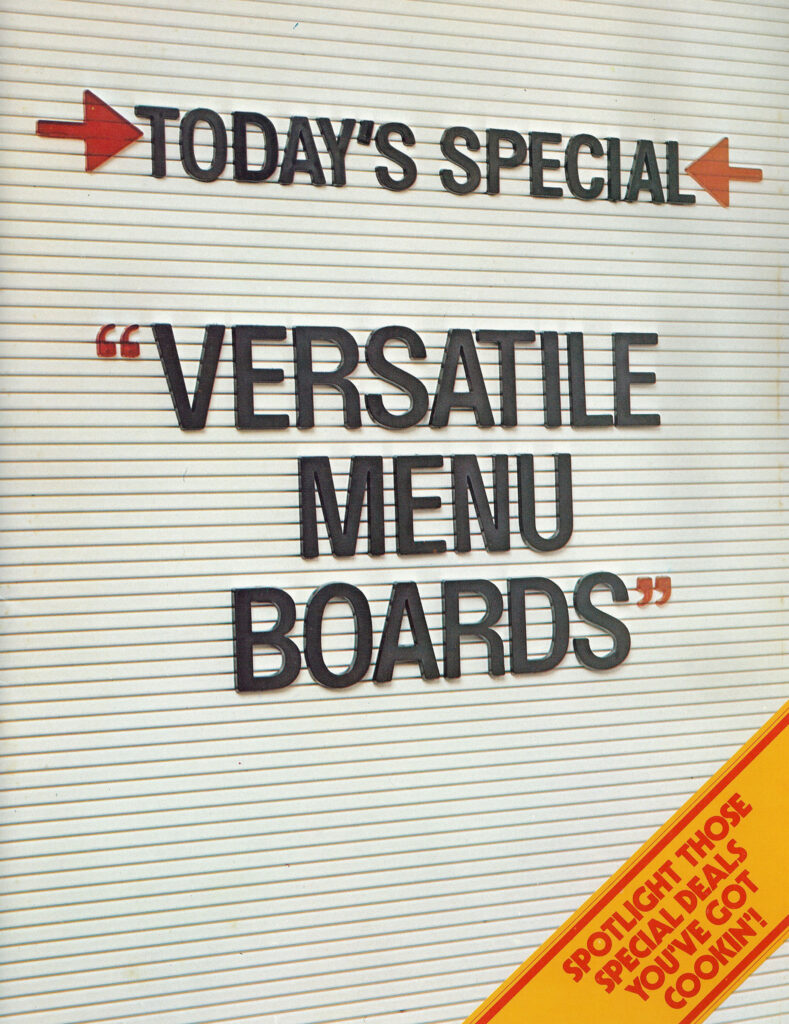
Table of Contents
- 1 Today’s Special: Versatile Menu Boards
- 2 The Shape of Things to Come
- 3 Customized Boards to Reflect Personality
- 4 Quick Promotions, Big Returns
- 5 Pictorial Inserts: Selling the Meal With the Drink
- 6 A Cultural Snapshot: Diners and Drive-Ins in the 1970s
- 7 Why the Mid-to-Late 1970s?
- 8 Legacy of the Marketeer Menu Boards
- 9 Final Reflection: Today’s Special Forever
- 10 Learn More About the Company Brand Featured in this Promotion
Today’s Special: Versatile Menu Boards
Coca-Cola’s trade catalog from the era proudly declared:
“Today’s Special: Versatile Menu Boards”
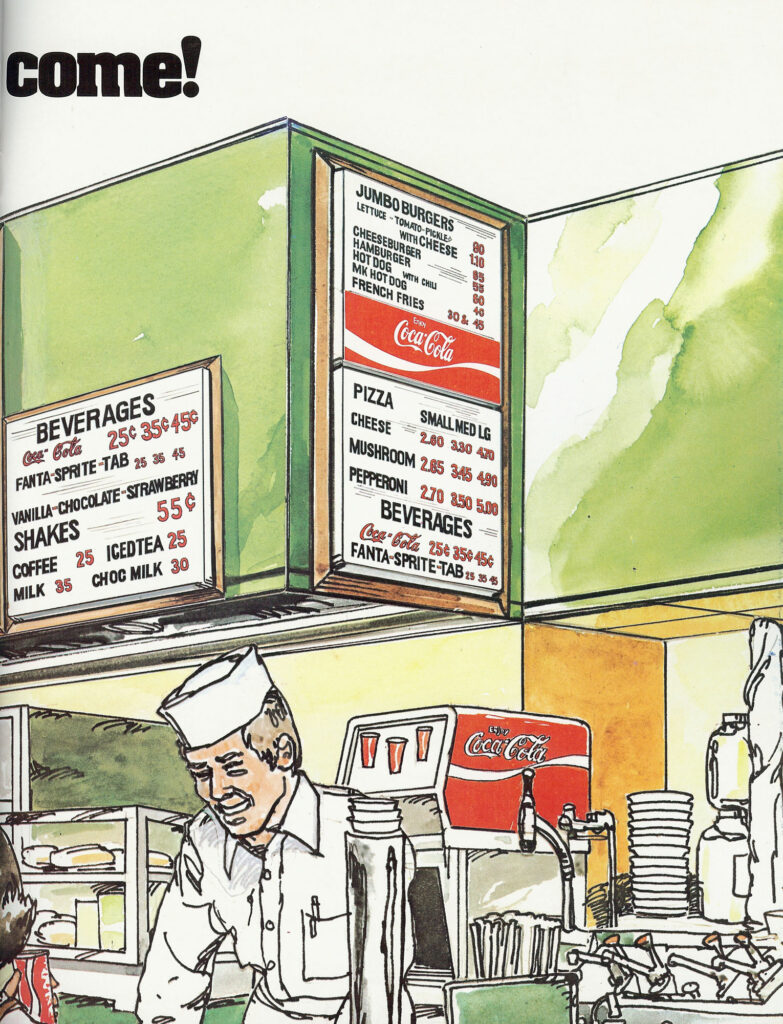
These were more than just static signs. Designed with interchangeable panels and crisp typography, they allowed restaurateurs to update menus daily, without needing a new board.
The Shape of Things to Come
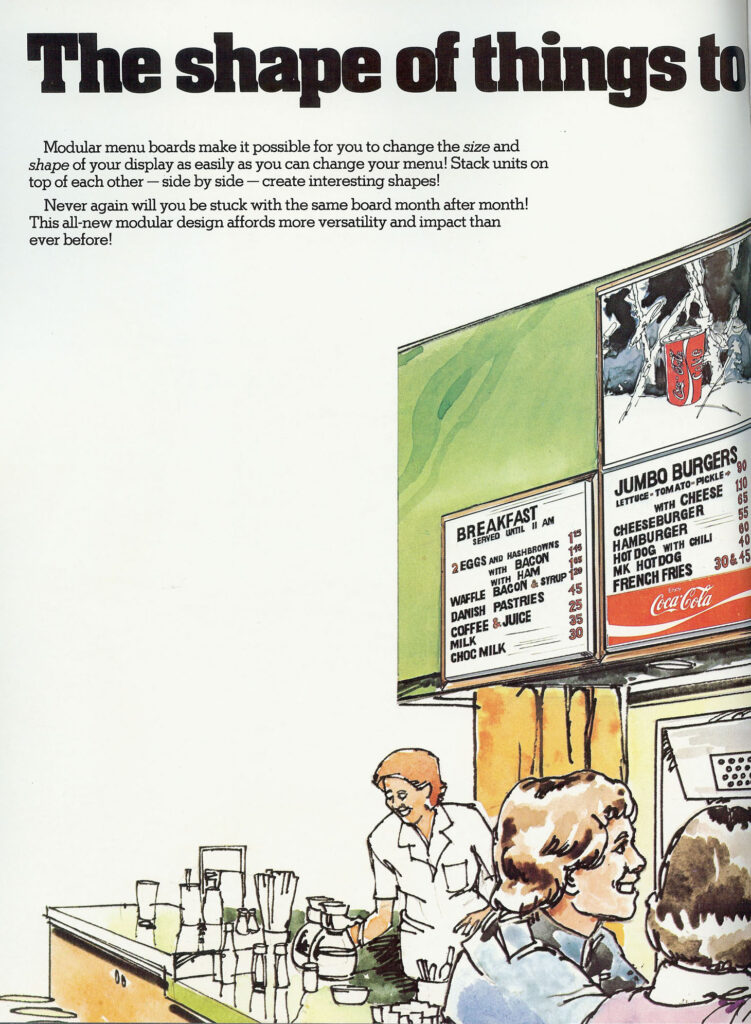
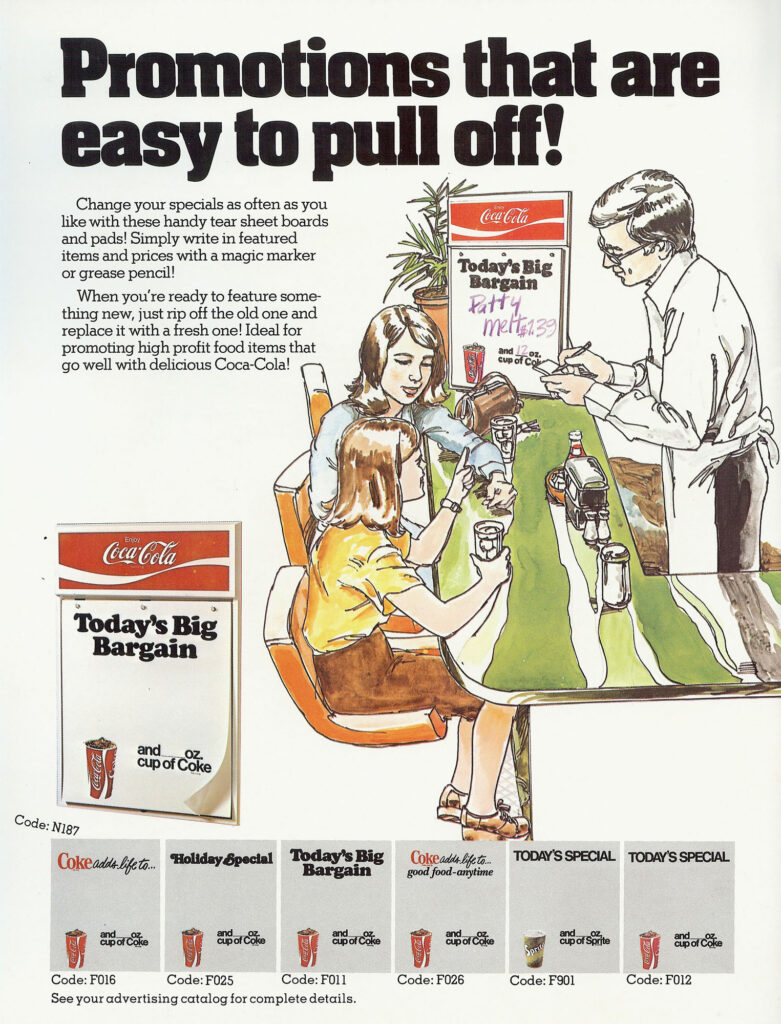
Illustrations in the catalog showed families enjoying burgers and fries under gleaming white menu boards with prices like:
- Jumbo Burger – 90¢
- Cheeseburger – $1.10
- French Fries – 30¢
The Coca-Cola logo, in its bold red script, anchored every board, linking quality beverages to hearty meals.
Customized Boards to Reflect Personality
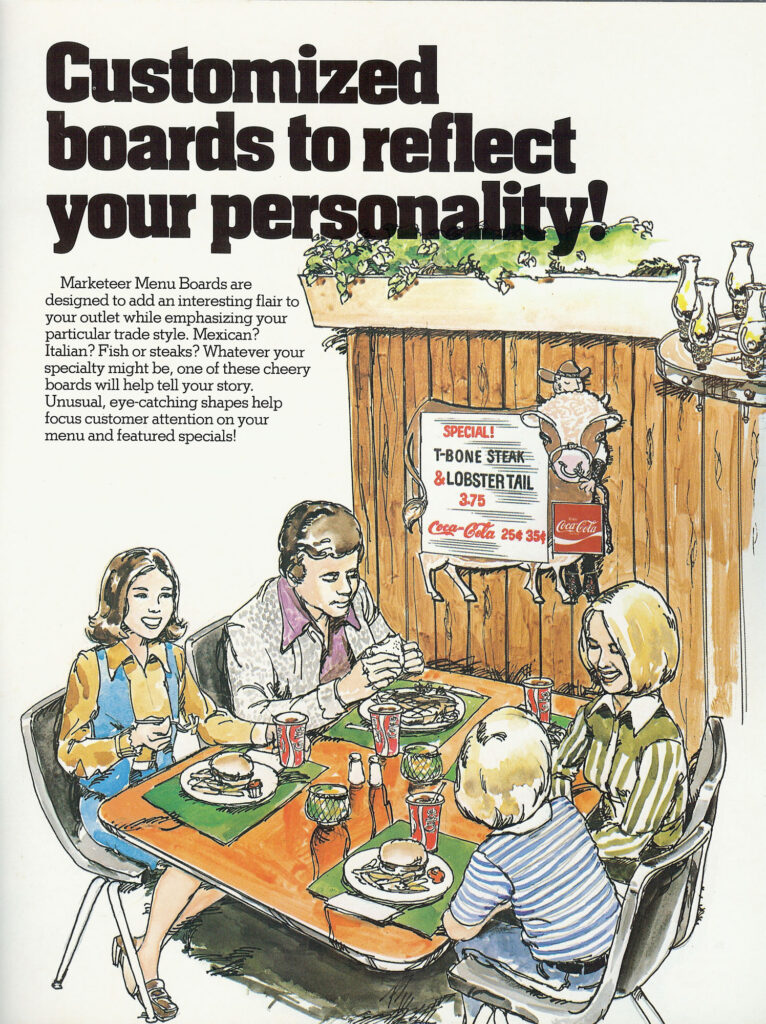
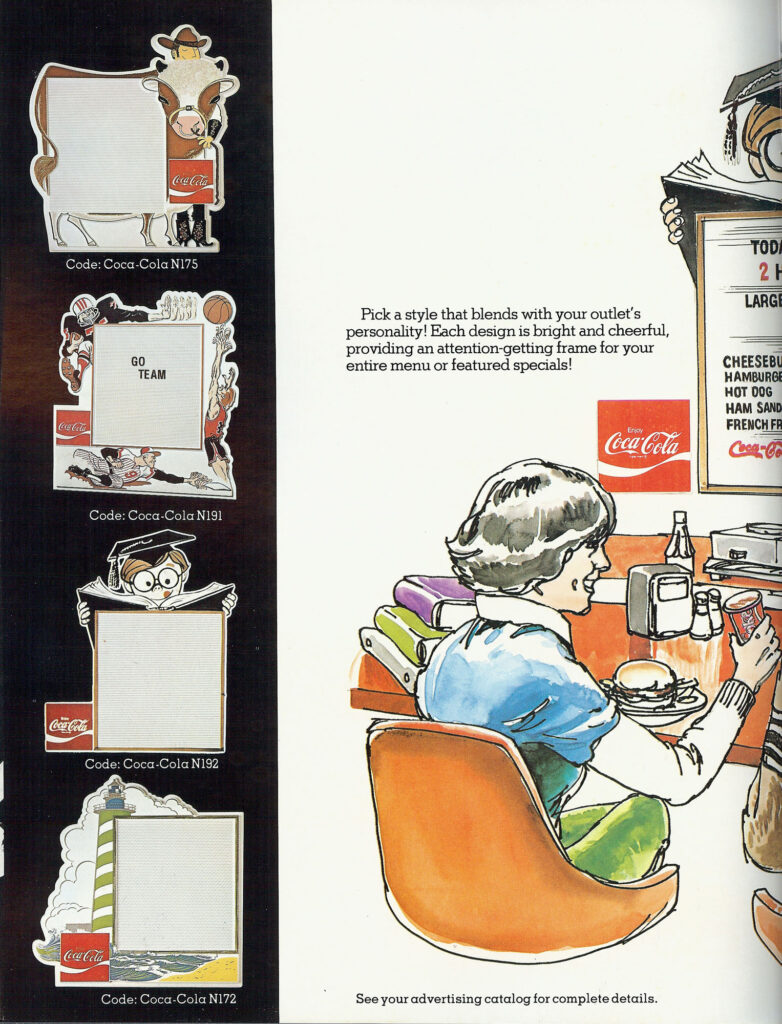
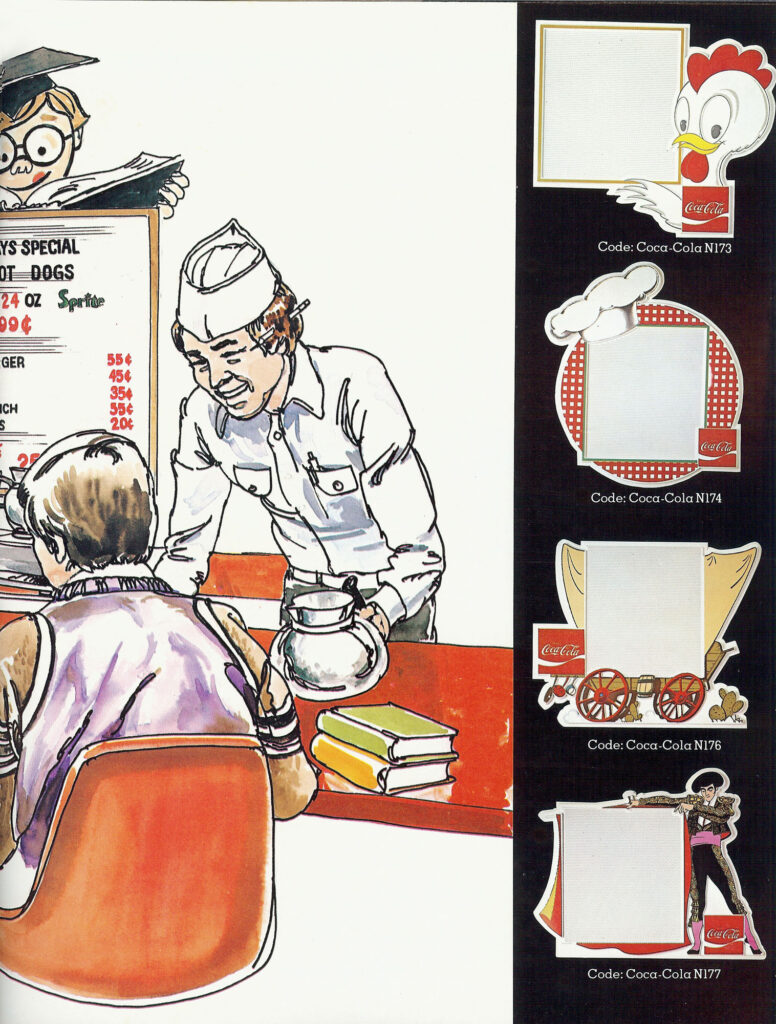
Themed frames gave eateries personality:
- 🐮 Cow-shaped boards for steakhouses
- 🏖️ Lighthouse motifs for coastal diners
- 🎓 Graduation caps for college cafés
- 🤠 Covered wagons for western BBQ joints
These designs weren’t just functional, they were marketing tools.
Quick Promotions, Big Returns
With tear-sheet boards and grease-pencil inserts, specials could be written and erased daily. A few of the combos featured:
- 🍗 Fried Chicken & Coke
- 🌮 Tacos & Coke
- 🍔 Patty Melt & Coke
Coca-Cola wasn’t just selling soda; they were selling higher margins and a branded experience.
Pictorial Inserts: Selling the Meal With the Drink
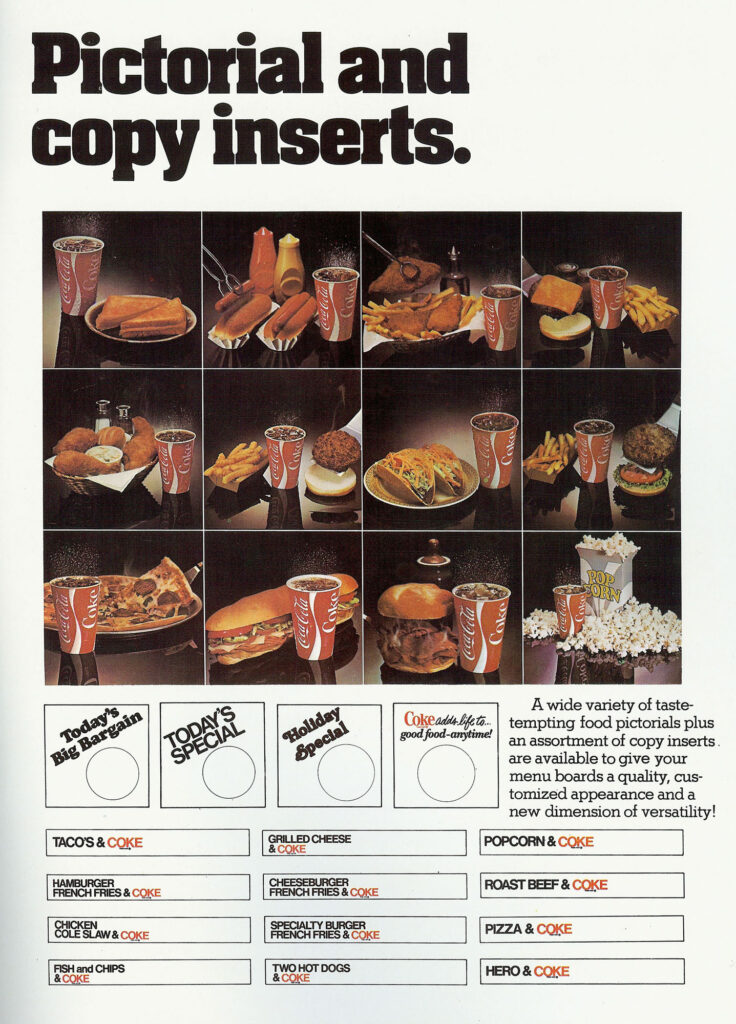
High-quality photo inserts showed:
- Golden fried chicken next to an ice-cold Coke.
- Pepperoni pizza paired with Coca-Cola.
- Burgers, fries, and paper Coke cups under bright diner lights.
These inserts helped even small diners look as professional as rising fast-food chains.
A Cultural Snapshot: Diners and Drive-Ins in the 1970s
Molded chairs, chrome soda fountains, paper hats, these visuals captured more than menus. They documented an era of community, affordability, and Americana, where a family meal out cost under $5.
Why the Mid-to-Late 1970s?
“Coke adds life” slogan debuted in 1976.
- TAB and Fanta branding mirror Coca-Cola’s 70s product lineup.
- Prices match pre-inflation dining costs.
- Soft watercolor illustrations echo 1970s advertising styles.
By 1982, digital menus and Diet Coke would usher in a new era. But in these pages, Coca-Cola reigned supreme.
Legacy of the Marketeer Menu Boards
Today, surviving examples of these boards are rare collectibles. Yet their influence lives on in digital menu systems and co-branded promotions worldwide.
Final Reflection: Today’s Special Forever
The Marketeer Menu Boards remind us of an age where even the simplest diner could feel modern, professional, and enticing, thanks to Coca-Cola.
“Today’s Special isn’t just on the plate, it’s on the wall, sparking cravings and sealing the deal with a Coca-Cola.”
Learn More About the Company Brand Featured in this Promotion
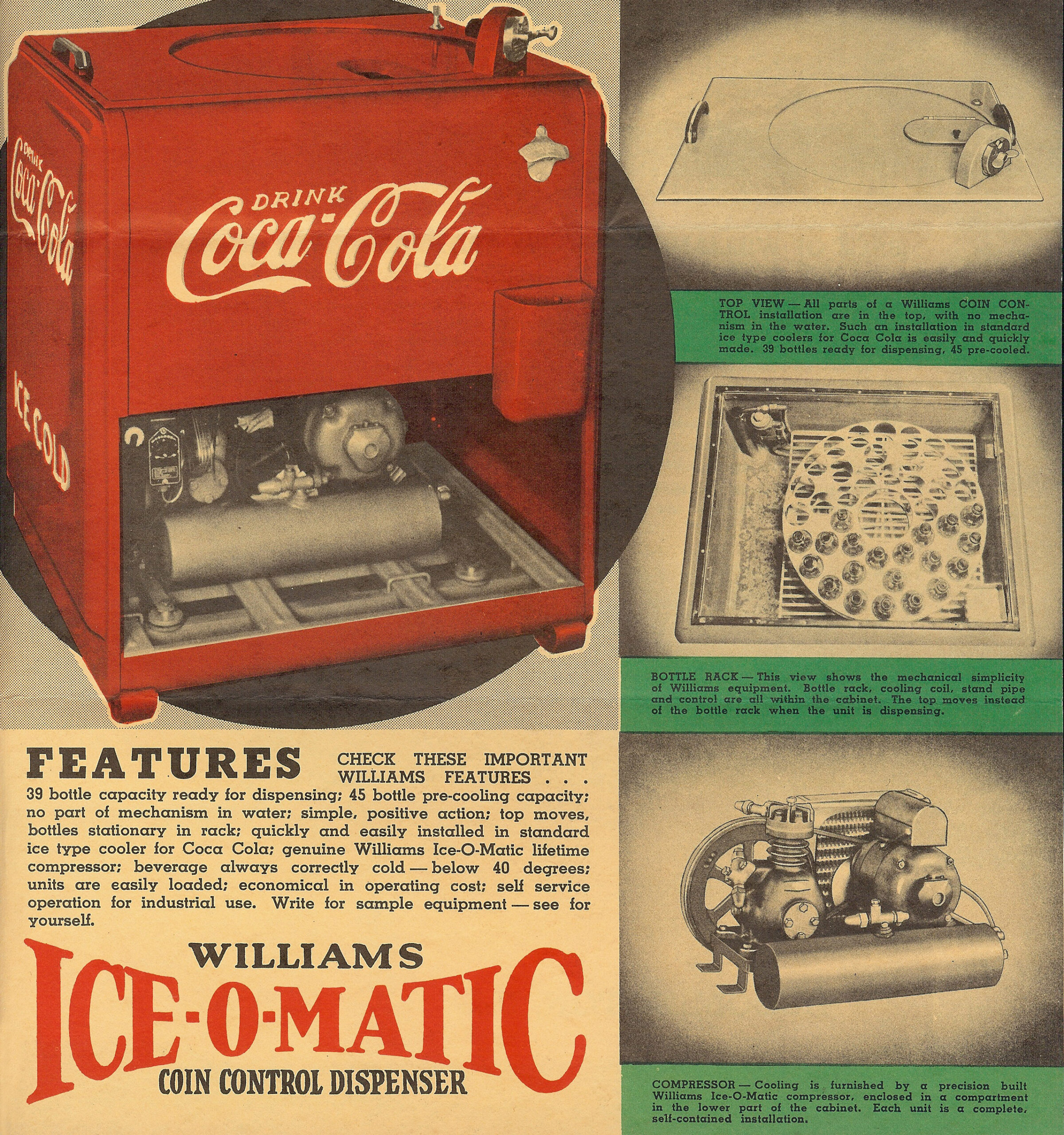
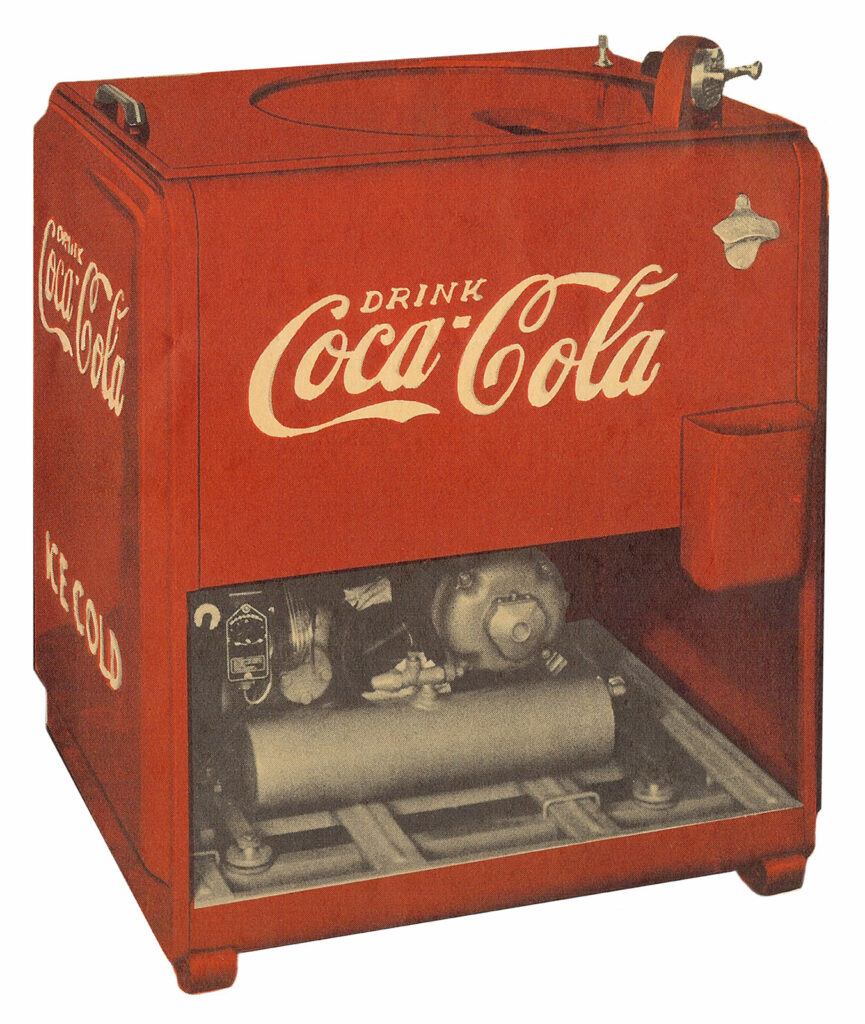
In August of 1937, the Williams Oil-O-Matic Heating Corporation of Bloomington, IL introduced a Coca-Cola coin control dispenser called the Ice-O-Matic. This new dispenser consisted of three parts: a top unit, a bottle rack, and a compressor. It could be added to a standard Coca-Cola ice cooler, updating it from ice to a cooler that was constantly cooling.
To promote their new coin control dispenser, the company distributed brochures to dealers and bottlers of Coca-Cola. The theme of the brochure emphasized that the new Coca-Cola coin dispenser could help dealers increase profits by expanding into new territories and outlets.
As the coin dispenser was introduced in August, the company suggested putting it to use in the fall or winter in various locations such as hospitals, laundries, post offices, city halls, service stations, department stores, manufacturing plants, and insurance offices with 50 or more employees. The brochure highlighted placing the new Coca-Cola dispenser in Montgomery Ward and Sears & Roebuck department stores. The company tagline read.
“Let Williams Ice-O-Matic Coin Dispenser help. Let it work for you.”
The sales brochure included an offer to try the Ice-O-Matic. Once a dealer tried one unit in a location, they would likely want to place more units in different locations that could not sell just one case of Coca-Cola otherwise. The offer concluded by informing dealers that the units were available and ready to ship from their factory, accompanied by a picture of the factory.
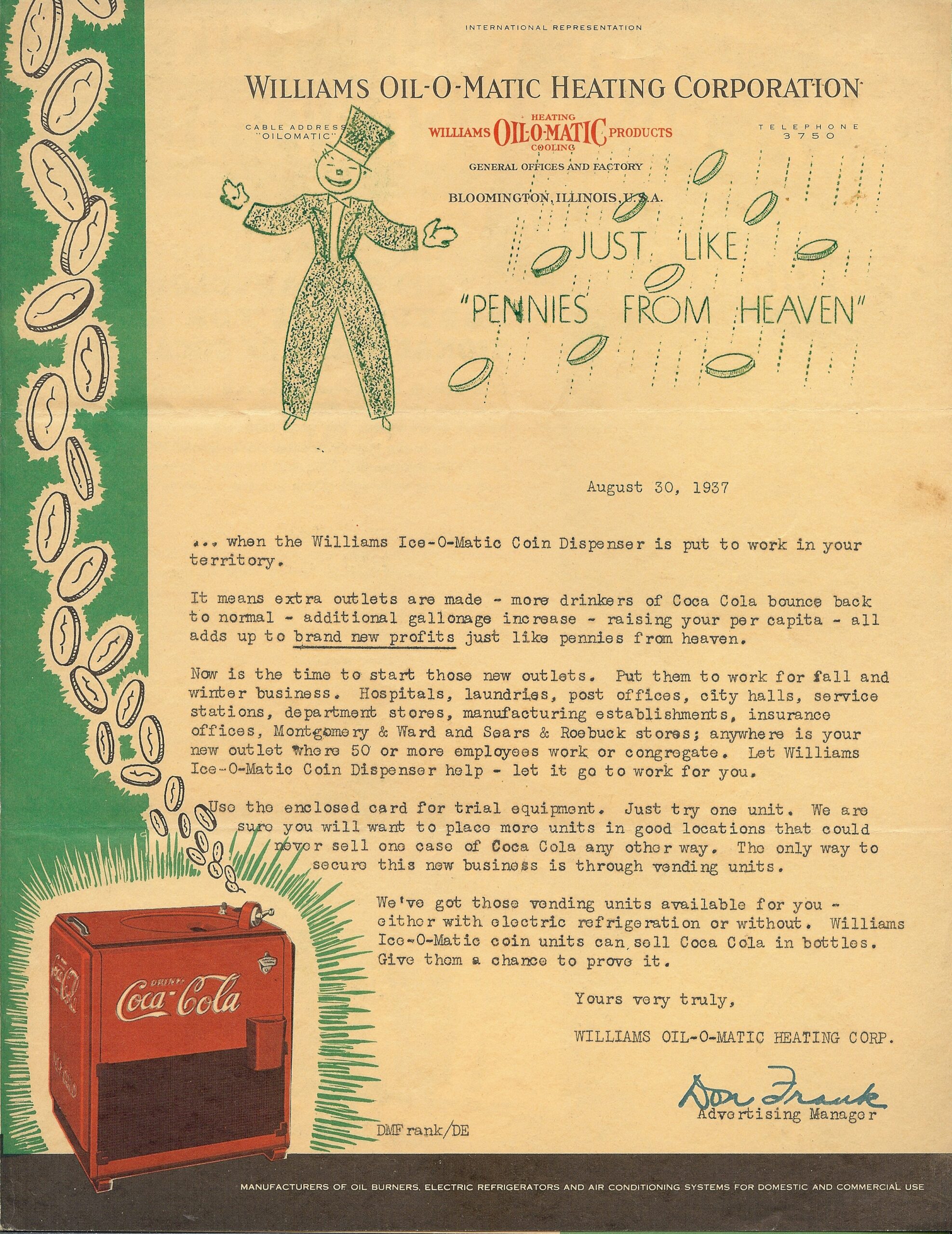
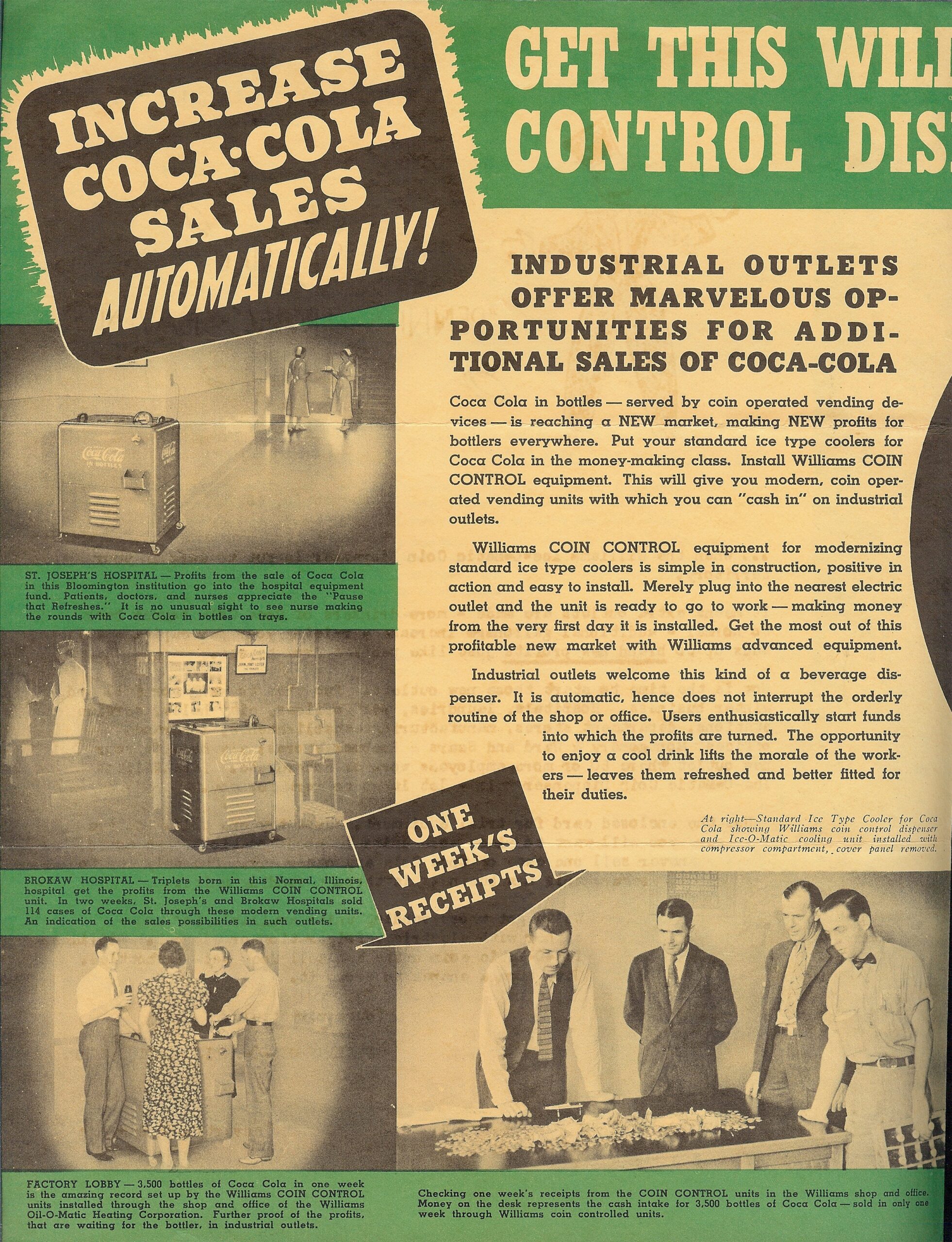
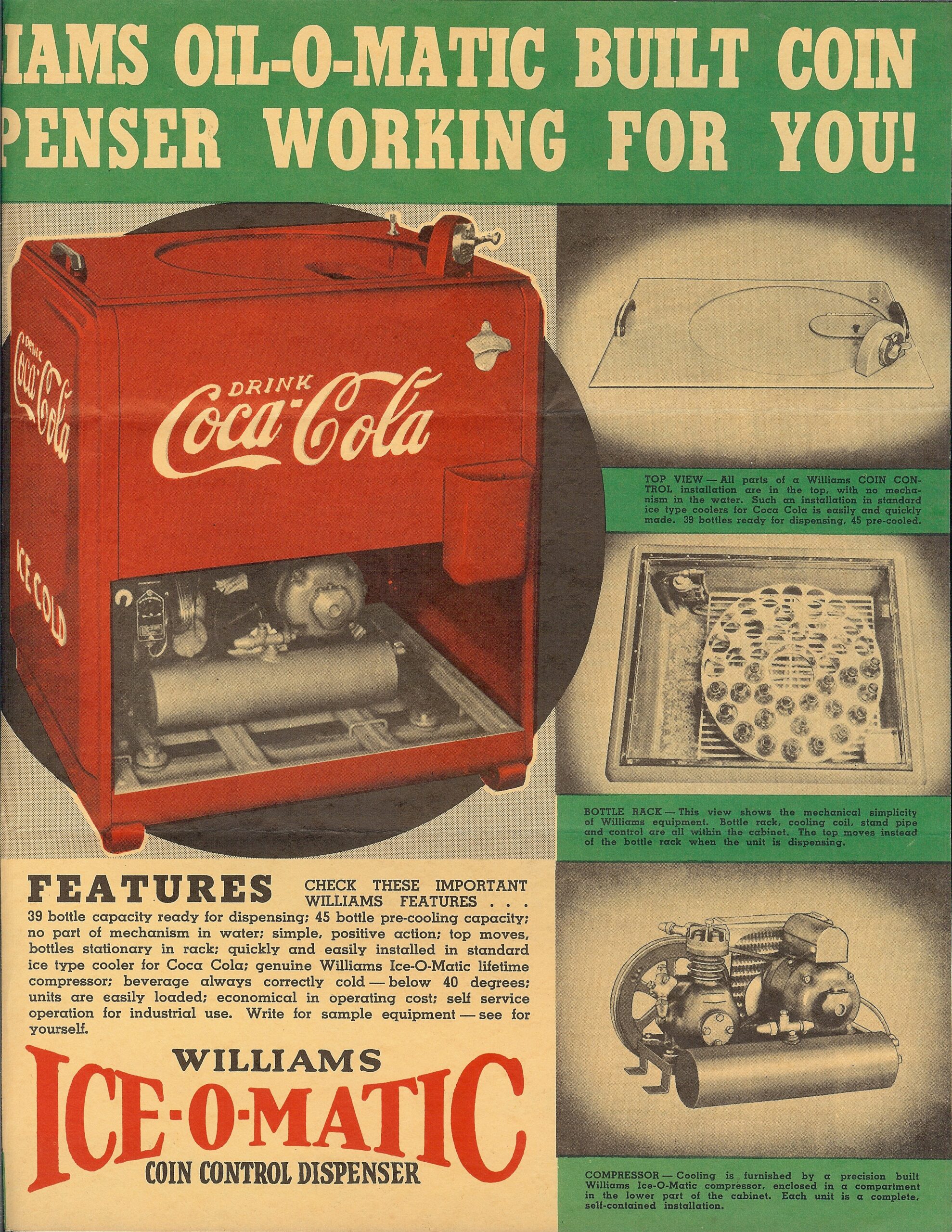
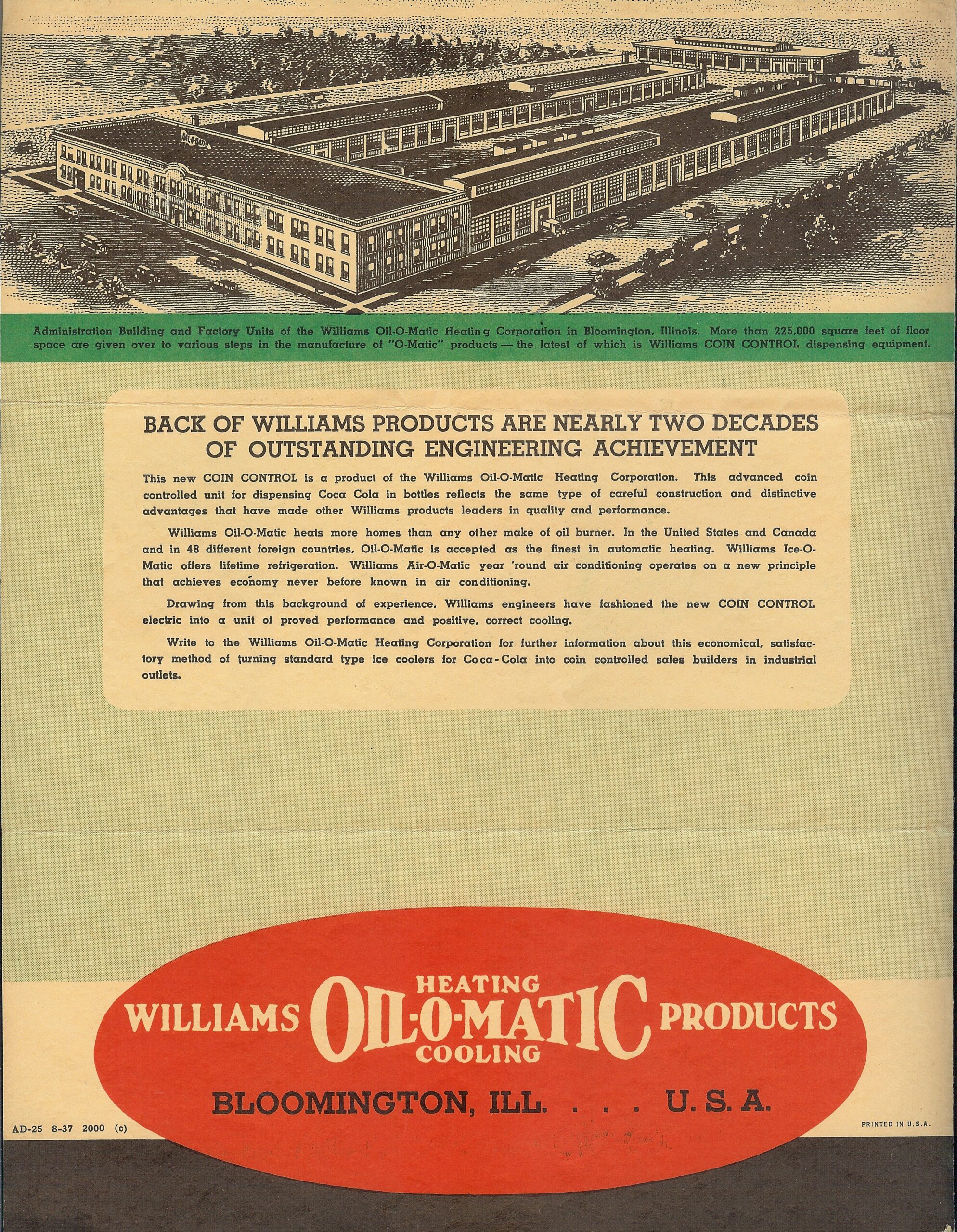
Table of Contents
Ice-O-Matic Features
When the Williams Ice-O-Matic Coca-Cola coin dispenser was introduced, it featured several key attributes.
- 39 bottle capacity
- 45 bottle pre-cooling capacity
- Quick and easy installation of the top unit and lifetime compressor on a standard ice cooler
- Beverages stayed consistently cold below 40 degrees
- Self-service operation for industrial use
Product Featured in this Story
This promotion featured the brand new Williams Ice-O-Matic coin dispenser for standard Coca-Cola ice coolers.
Learn More About the Manufacturer and the Company Brand Featured in this Story